By Christine Charity Mwebesa
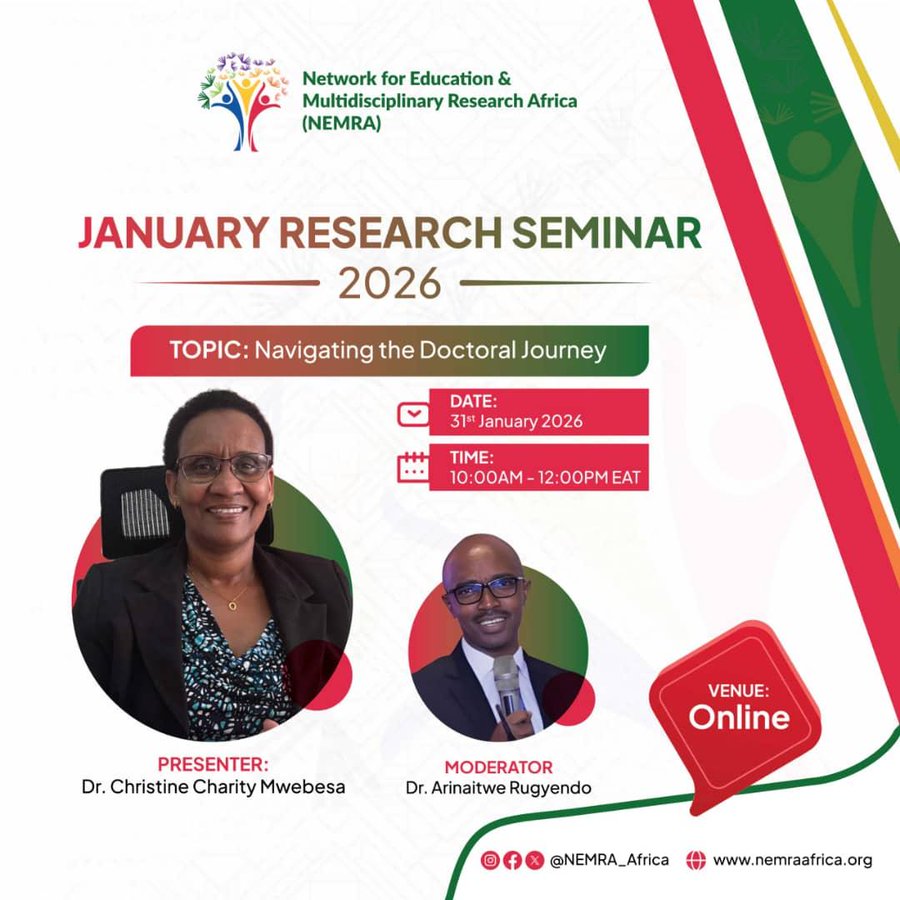
Last week on Saturday, the Network for Multidisciplinary Research Africa (NEMRA) invited me to give a talk on: “Navigating the Doctoral Journey.” I gladly accepted because as a former doctoral student myself, I know what graduate students go through to achieve their ultimate goal.
Many succeed but few fail to realize their dream. The doctoral process is often shrouded in a mystique of intellectual brilliance. Yet, for those who have traversed its peaks and valleys, the reality is far more grounded in endurance than raw IQ. The reasons for the success by many and for the failure by a few is what informed my presentation on Saturday January 31, 2026. Here below, I share a canonization of that presentation for the wider audience who missed out.
While many view a Doctor of Philosophy (PhD) degree as a mere academic requirement, it is more accurately described as a transformative journey defined by unexpected turns, self-discovery, and the rigorous acquisition of new knowledge.
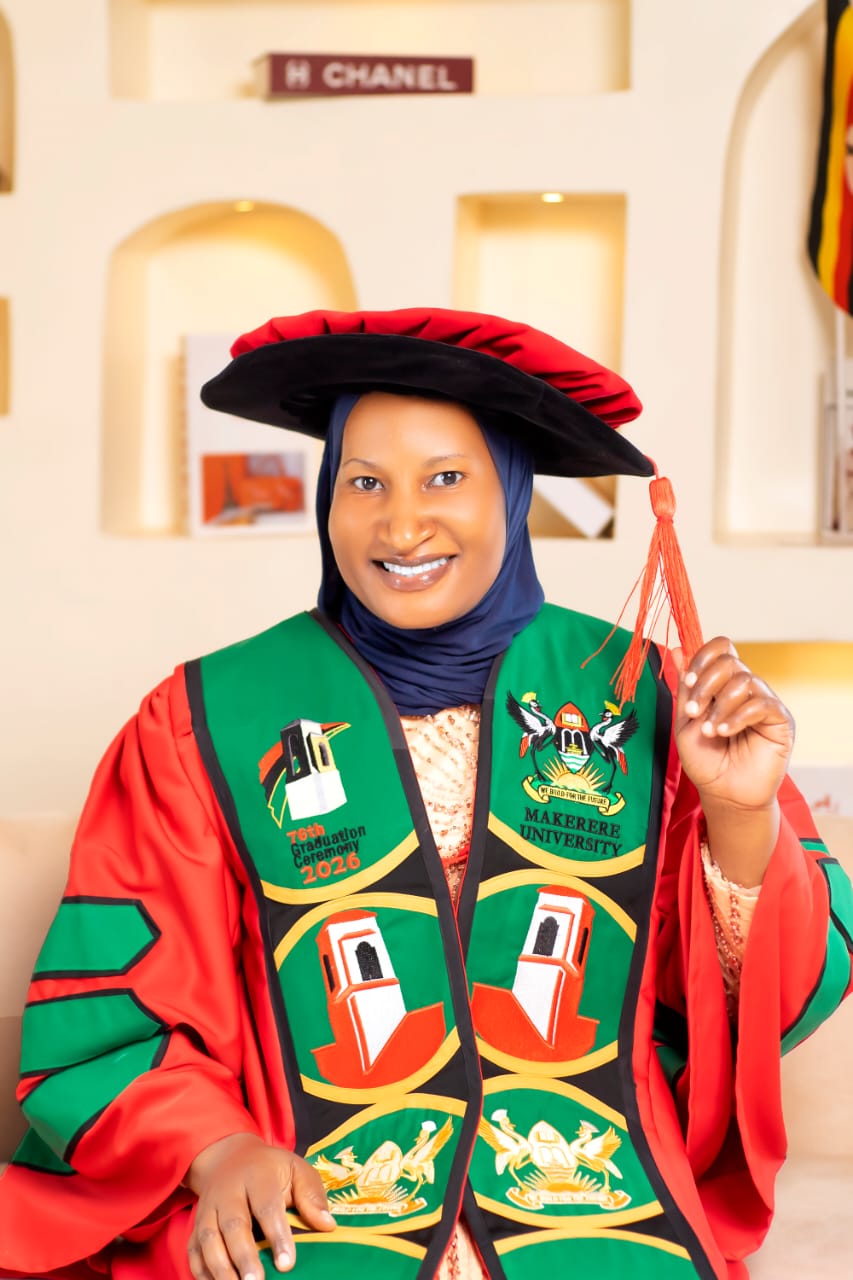
Drawing from my own experience – registering on March 7, 2017, and graduating on December 14, 2020, I completed my doctorate in precisely three years and nine months.
Within that time frame, I managed the complexities of life, including pregnancy and motherhood, while publishing book chapters and presenting at international conferences.
Success in this arena is a result of meticulous preparation, deliberate self-management, and the discipline to keep one’s eyes on the ultimate prize.
The Architecture of Preparation
As the biblical wisdom in Luke 14:28 suggests, no one sets out to build a tower without first sitting down to count the cost. The doctoral journey requires a similar audit long before the formal enrolment date.
Prospective scholars must do their homework on potential institutions and supervisors, evaluating financial sustainability, source of funding, and the balance between full-time or part-time commitments.
It is equally vital to assess family demands and the availability of a support system, as the academic environment can be as taxing on one’s health as it is on the mind. Early identification of personal weaknesses is a hallmark of a successful candidate.
For instance, realizing I lacked depth in qualitative methods, I prioritized every available seminar on the subject to bridge that gap. This stage of preparation is less about having all the answers and more about building the consistency and endurance needed for the long haul.
During my journey, I encountered many exceptionally brilliant students who stalled despite having the same supervisors and resources. The differentiator was rarely intelligence; it was self-management.
Those who struggled often lacked time discipline, ignored appointments, or failed to integrate into the academic community. Completing a PhD is an uphill task that demands a strategic balance between burning the midnight oil and knowing when to rest.
If the underlying motivation is not anchored in a strong personal “why,” the isolation and high stakes of original research can easily lead to burnout. Self-management also involves the emotional intelligence to navigate the “impostor syndrome” and the maturity to take corrections positively, ensuring the researcher remains in the driver’s seat of their own project.
The Scholar’s Toolkit: Dos and Don’ts
To move from candidate to graduate, a scholar must adopt a tactical approach to the daily grind of research and writing. One must actively seek wisdom during orientation and learn the specific culture of their university to navigate potential administrative hurdles.
Building meaningful peer networks is essential, as academia is as much a political community as it is an intellectual one. Presenting progress at every available opportunity provides feedback that can refine a philosophical stance or clarify a problem statement.
Technical organization is equally paramount; using reference management tools like Zotero or Mendeley from day one prevents the chaos of unreferenced citations during the final submission. It is also wise to maintain a journal for reflections and frustrations, creating a template based on the university’s framework to make the writing process more friendly and time-efficient.
Skip to PDF contentThe Graduation as a New Horizon
The doctoral journey is notoriously demanding, marked by stress, uncertainty, and significant personal sacrifice. However, it is precisely this rigor that makes the achievement unique and explains why it is celebrated above almost all other qualifications.
It is important to remember that the thesis is not the end of the journey but rather the evidence of rigorous training. Graduation marks the true beginning of a scholarly life, armed with new networks, polished skills, and a transformed identity.
While every path is different and there is no single “correct” way to earn a PhD, sharing these experiences ensures that the road is slightly smoother for the next generation of researchers who dare to build their own intellectual towers.
Below, I share a Dos and Don’ts matrix to guide graduate students on their journeys!
References
1. Boulay, N. (2021). Navigating mental disability as a doctoral student. In The doctoral journey as an emotional, embodied, political experience (pp. 81-93). Routledge.
2. Rockinson-Szapkiw, A. J., & Spaulding, L. S. (2014). Navigating the doctoral journey: A handbook of strategies for success. Bloomsbury Publishing PLC.
3. Woolston, C. (2019). PhDs: the tortuous truth. Nature, 575(7782), 403-407.
About The Author