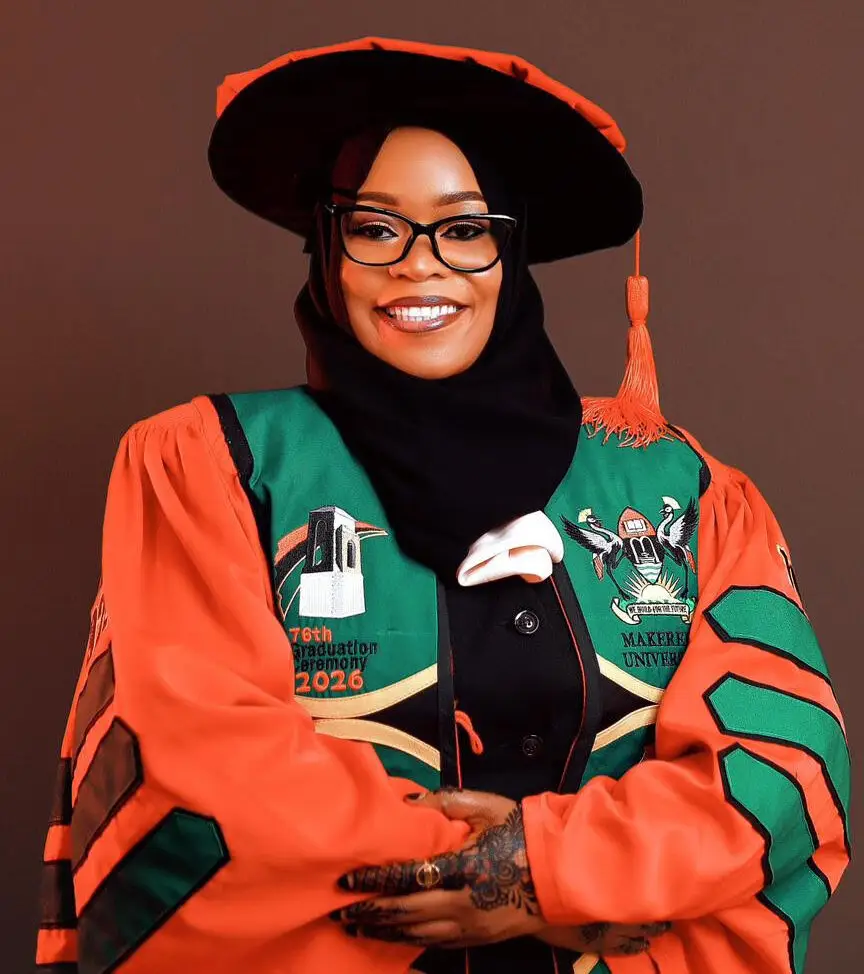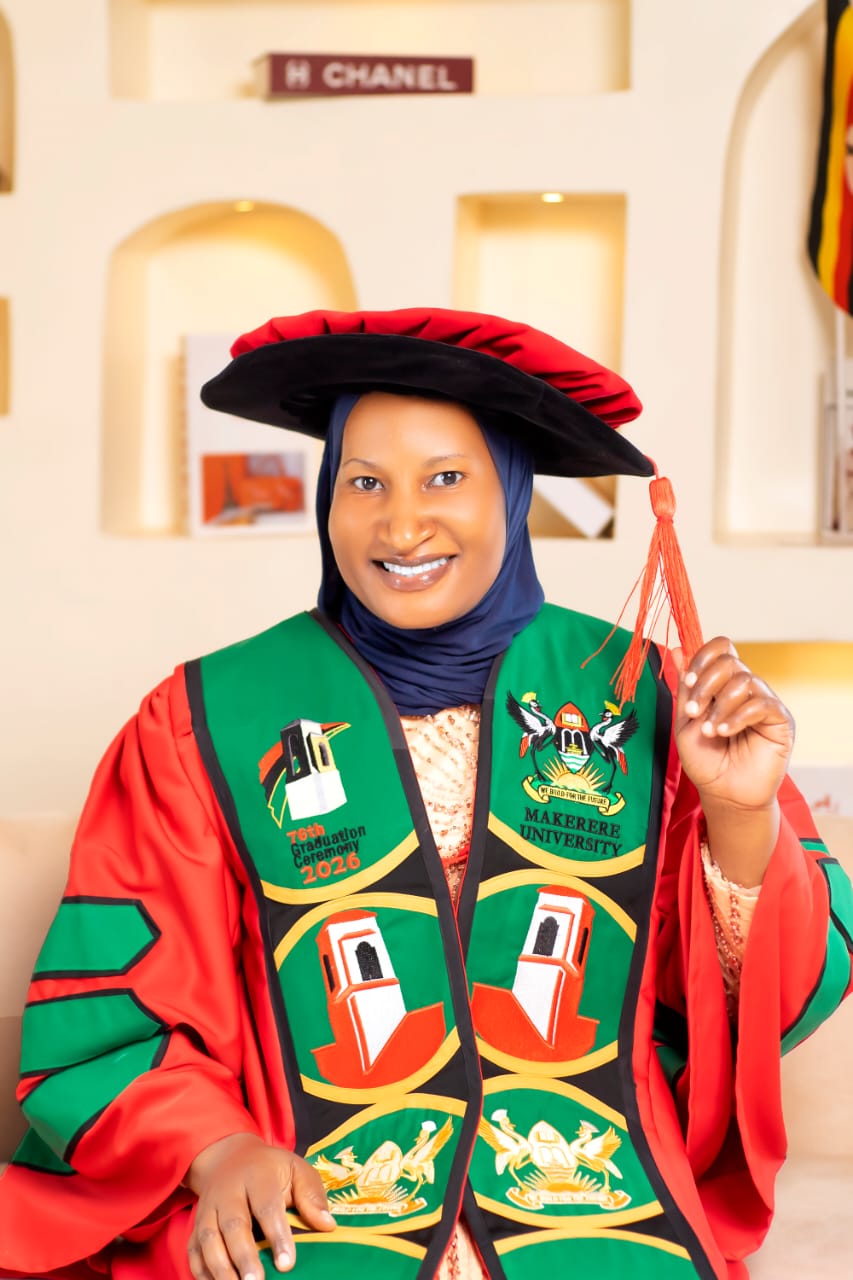
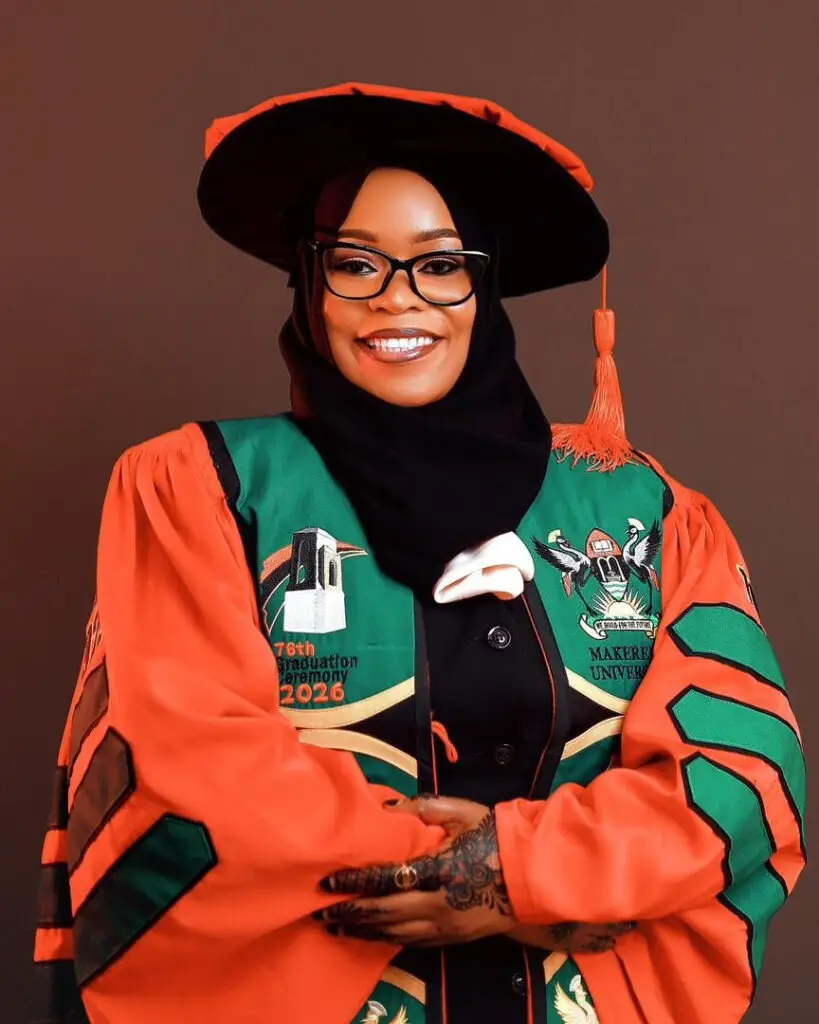
When Dr.Gimono E. Munira Ali sat in a hospital waiting room in 2018, she witnessed something that would change the course of her professional life. A deaf pregnant woman, unable to communicate with healthcare workers and with no interpreter available, left the facility without receiving any care. That single moment quiet, unremarkable to everyone else in the room set Gimono on a seven-year journey from the hospital waiting room to a completed doctorate at Makerere University. She speaks ResearchFinds News about what she saw, what she found, and what she believes Uganda must do differently.
ResearchFinds News (RFN):You were pregnant yourself when you witnessed this incident in 2018. Can you take us back to that waiting room?
Gimono: I had gone for routine antenatal care at a public hospital. While I was waiting, I noticed a deaf pregnant woman who could not be attended to. There was no sign language interpreter available, and she had no relative with her who could interpret. She waited, and then she left without receiving any help at all.
That moment stayed with me in a way I could not shake off. I kept asking myself: how does a woman like her access sexual and reproductive health services? How does she get information about maternal care, contraception, adolescent health? If she could not be helped on a routine visit, what happens when it is an emergency?
RFN: What did you do with those questions?
Gimono: I did not let them sit. I enrolled for sign language training at the Uganda National Association of the Deaf, where I obtained a Certificate in Sign Language. I later pursued a Diploma in Sign Language Interpreting at Kyambogo University. I wanted to understand the world these women were navigating not from the outside, but from as close to the inside as I could get.
Through those training programmes, I met and worked with Dr. Sam Lutalo at Kyambogo University, Esther Aguti at St. Luke’s Church of the Deaf in Ntinda, and many deaf women themselves. What they described was consistent and deeply troubling negative public attitudes, communication barriers, and systemic exclusion at almost every point of contact with health services.
RFN: What did the leadership of the Deaf community tell you?
Gimono: Robert Nkwangu, the Executive Director of the Uganda National Association of the Deaf, confirmed what I was hearing from individuals. The challenges deaf pregnant mothers face when seeking maternal healthcare are significant and largely unaddressed. The system was simply not built for them. That confirmation, coming from the highest level of the community’s own leadership, made it clear that this was not anecdotal. It was structural.
RFN: That takes us to your doctoral research. What was the study about?
Gimono: My PhD research was titled “Sexual and Reproductive Health Rights of Deaf Women and Girls in Uganda.” It was undertaken in the Department of Philosophy at the School of Liberal and Performing Arts, Makerere University. The central question was whether deaf women and girls in Uganda are able to access their sexual and reproductive health rights and if not, why not, and what needs to change.
RFN: And what did you find?
Gimono: The findings were sobering but not surprising, given what I had already witnessed. There is a serious and widespread lack of sexual and reproductive health information tailored to the linguistic needs of deaf women and girls. Because clear guidance is unavailable in accessible formats, women are left to navigate medication and contraception without adequate instruction. In many cases this leads to misuse of medication or incorrect use of contraceptive methods with real consequences for their health.
The absence of sign language interpreters in hospitals and health centres remains the most immediate and damaging barrier. Beyond that, many health facilities do not provide written instructions explaining how contraceptive methods should be used, and antenatal programmes almost never accommodate sign language users. These are not complex or expensive problems to solve. They are gaps that persist because deaf women’s needs have simply not been prioritised.
RFN: Your research recommends integrating something called “deaf epistemology” into health policy. Can you explain what that means?
Gimono: Deaf epistemology refers to the deaf way of knowing and understanding the world the frameworks, communication systems, and lived experiences through which deaf people make sense of their reality. It is distinct from the hearing world’s assumptions about how information should be delivered and received.
What I am recommending is that health communication strategies and policy frameworks stop designing services based exclusively on hearing norms and then trying to retrofit them for deaf users. Instead, deaf ways of knowing should be integrated from the beginning in how information is presented, how consent is obtained, how follow-up care is communicated. This is not a radical idea. It is simply good public health practice applied equitably.
RFN: Let us talk about the journey itself. You pursued this PhD while working as a lawyer, a lecturer, a wife, and a mother. How did you manage?
Gimono: Honestly? With great difficulty and enormous support. Long days and very short nights became normal. There were periods of real isolation, anxiety, and exhaustion. The challenge of managing professional responsibilities, academic seminars, family life, and the emotional weight of research that involves vulnerable communities all simultaneously is something no one fully prepares you for.
A turning point came in 2023 when I was selected as a fellow by the Mawazo Institute, a women-led non-profit based in Nairobi that supports early-career African women researchers. I was chosen from among more than 2,000 applicants across 16 African countries. That 15-month programme was transformative it strengthened my emotional resilience and gave my academic work a significant boost at a moment when I needed both.
RFN: How was the research funded?
Gimono: That is a question I answer with both honesty and gratitude. I applied for several scholarships and was unsuccessful. My husband became the primary funder of my doctoral studies. That is a significant thing to acknowledge that behind this research is a partner who believed in it financially when institutions did not.
Additional support for data collection came from the Makerere University Research and Innovations Fund and House of Zaka. The Mawazo Institute supported my publications. I am grateful to all of them. But I also want to be honest that funding for research on marginalised communities particularly research by African women on African women remains deeply inadequate, and that needs to change.
RFN: The deaf community was involved in the research process itself. Why was that important to you?
Gimono: Because research done on a community without that community’s active participation tends to produce solutions the community does not recognise as their own. Throughout the study, members of the deaf community were actively involved in shaping the research questions, in the data collection process, in reviewing what the findings meant in practice. That involvement was not a methodological formality. It was a commitment to ensuring that the work remained respectful, relevant, and capable of producing practical change.
RFN: What do you want Uganda’s health system to do differently as a result of your research?
Gimono: Three things, at minimum. First, deploy sign language interpreters in hospitals and health centres particularly in maternal and reproductive health units. This is the single most immediate intervention that would change outcomes for deaf women today. Second, produce and distribute written health information in accessible formats that do not assume literacy in spoken language conventions. Third, train health workers in basic Deaf awareness not fluency in sign language, but enough understanding to recognise a deaf patient’s needs and respond appropriately rather than turning them away.
The woman I saw in that waiting room in 2018 was not an exceptional case. She was representative of thousands of deaf women across Uganda who encounter that same wall every time they need care. My research gives those women a body of evidence to stand behind. Now the system needs to move.
RFN: Finally, what do you hope people take away from your story as much as from your research?
Gimono: That a single moment of witness carries responsibility. I could have sat in that waiting room, watched that woman leave, and gone home and forgotten her. Most people did. I could not. And I think that inability to forget to let an injustice pass without asking why and what can be done is ultimately what a doctorate, and a career in research, and a life in public service, should be built on.
I am grateful to God, to my husband, to my family, to my supervisors and mentors, and to every deaf woman who trusted me with her story. This work is theirs as much as it is mine.
Dr. Gmono E. Munira Ali is a lawyer, lecturer, and researcher at Makerere University. Her doctoral research, “Sexual and Reproductive Health Rights of Deaf Women and Girls in Uganda,” was completed at the Department of Philosophy, School of Liberal and Performing Arts, Makerere University.
About The Author