Research Finds News Science Desk
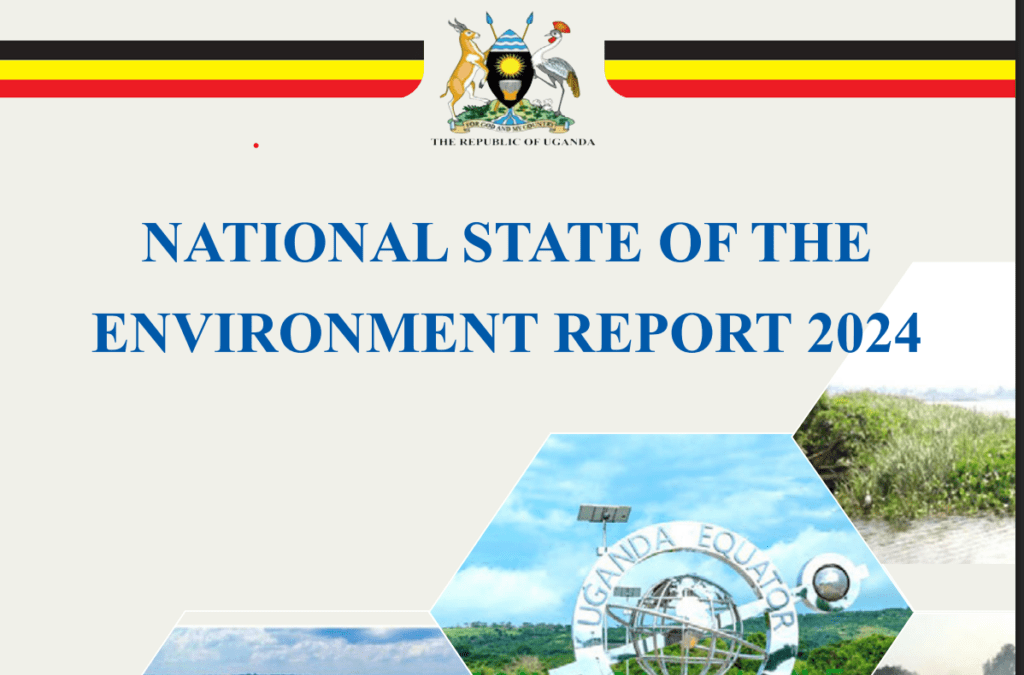
Kampala, Uganda— A groundbreaking National State of the Environment Report 2024 (NSOER 2024) by the National Environment Management Authority (NEMA) has listed 11 heart-rending drivers behind environmental change in Uganda.
The 155-page report, which has been released to the public on the NEMA website, reveals clinical details of how the country’s forests have shrunk, its wetlands are vanishing, its air quality in urban areas is poisoning cities, and its soils are collapsing, naming exactly what is causing it.
The report comes in the wake of President Yoweri Museveni’s February 23 directive to the Chief of Defence Forces, Gen. Muhoozi Kainerugaba, to halt the destruction of Bugoma Forest Reserve in Mid-Western Uganda following reports of encroachment by suspected senior army officers.

Uganda, one of the most biologically rich nations on Earth, hosts over 18,000 species, has 13% of its land area in wetlands, sits astride the River Nile, and is home to the mountain gorilla—one of the most iconic endangered animals alive. Uganda’s soils have fed generations and its forests have sheltered millions, but these drivers are systematically dismantling all of it.
The report was the work of contributions from technical staff of the agency and experts from institutions like Makerere University, Kabale University, the Ministry of Water and Environment, NaFIRRI-NARO, the Natural Chemotherapeutics Research Institute, the Uganda National Meteorological Authority, the Wildlife Conservation Society, the Electricity Regulatory Authority, the Ministry of Energy and Mineral Development, the Science Technology and Innovation Secretariat, the Ministry of Tourism, Wildlife and Antiquities, the Uganda Bureau of Statistics, and the Uganda National Bureau of Standards.
The report, a comprehensive scientific and policy assessment, is mandated by the NEMA Act and produced every two years, drawing on data from Makerere University, the Uganda Wildlife Authority, the National Forestry Authority, the Uganda National Meteorological Authority, the Ministry of Water and Environment, and a dozen other institutions. It is the most authoritative account of what Uganda has done to its natural environment, and what the environment is now doing in return.
Findings
Findings from the report paint a picture of a nation in ecological recovery, despite some structural challenges. With over 40% of land degraded, forest cover recovered from only 9% in 2015 to now 13% of total land surface, with wetlands recovering from 8.9% of Uganda’s land surface to now 13.9%.
“This puts Uganda in the lead on the African continent in wetland conservation and among the top three globally,” reveals NEMA Executive Director Dr. Barirega Akankwasah in a chat with this website.
The report reveals average wetland cover in Africa stands at 3% and globally at 6%. In the East African region, the average is 10%. “This means Uganda stands tall amongst its peers on the frontline of ecological recovery,” he adds.
Air quality also improved from 35 micrograms per cubic meter of PM 2.5 in 2015 to now 13%, which is classified by the WHO as “good,” according to the report.
“The EU standard is 25; we are at 13. The ultimate best is 5, but no country globally has attained this. WHO sets 35, 25, 15, 10, and 5 as transitional targets, and Uganda is nearing the final target,” reveals Dr. Akankwasah.
Despite significant successes in forest cover and wetland cover recovery, Uganda continues to face environmental pressures. As such, the report identifies the following eleven drivers as the architects of this environmental stress:
Population Growth: The National Population and Household Census (NPHC) 2024 report puts Uganda’s population at 45.9 million persons. According to this same report, the country’s population is projected to soar to 75 million persons by 2040. The NEMA report’s findings reveal that adding 1.5 million people annually is creating an acute demand for land, water, and wood fuel, outstripping the regenerative capacity of the country’s ecosystems.
Poor Waste Management: This is a critical factor in Uganda’s climate crisis. The findings indicate that urban centers are generating more waste than they can process. This waste generation is even faster than one can fathom. The report raises a red flag: it is this waste, especially from untreated industrial and human effluent, that is fouling water bodies like Lake Victoria, compromising drinking water for millions of Ugandans, especially in fishing communities and tourism sectors.

Illegal Wildlife Trade: Uganda is home to a variety of wildlife, but the unending illegal wildlife trade has been raised as a critical driver. The report calls it the “hidden economy of poaching” which is fueling the trafficking of wildlife products, thus hollowing out Uganda’s biodiversity. The report flashes the global criminal networks targeting pangolin scales, primates, and ivory, hence severing the biological links necessary for forest regeneration and economic stability.
The Poverty Trap: The report highlights the poverty driver that forces many communities to clear forests for charcoal and drain wetlands for subsistence farming. The report observes that with 70% of the country dependent on agriculture, environmental destruction is often a desperate choice, creating a feedback loop where ecological decay further deepens human deprivation.
Rapid GDP Growth: Projected to grow at 6% in the next financial year, this growth has come at an environmental price too steep to easily tame. The report shows that the burgeoning local and global markets for wood products like timber, and other agricultural produce like sugarcane, coffee, and tobacco, have triggered aggressive incentives to convert high-biodiversity natural land into commercial mono-crops, moving faster than regulatory systems can tame.
Urbanization and Infrastructural Development: While urbanization in Uganda is reportedly growing at 5.2%, cities like Kampala are invading natural buffers in their expansion drive. This expansion has consumed hillsides and wetlands, destroying the natural drainage systems that once mitigated the now frequent catastrophic flooding and poor air quality in the city.
Accelerating Climate Crisis: On the global scale, the report reveals that Uganda has warmed by 1.3°C in just 50 years, with 2023 marking the hottest year on record. This self-accelerating crisis has created erratic weather patterns, destroying vegetation which acts as carbon sinks, and amplifying climate vulnerability and resource scarcity everywhere, including Uganda.
Rapid Industrialization: According to official government sources, Uganda has over 8,000 factories and is growing. The report says that the expansion of manufacturing and extractive industries is generating hazardous levels of air and water contamination. While the country needs industries to create more jobs, the offloading of hazardous material in wetlands near factories is disrupting critical environmental ecosystems, highlighting a massive gap between industrial growth and enforcement.
Land Use Conversion: To pave way for agriculture, the report reveals that while Uganda is undergoing a rapid conversion of its ecological identity into farmland, the 62.5% loss of its forest cover since 1990 has left the country’s critical ecosystems destroyed, dismantling essential systems that regulate water supply and soil health for the entire region.
Ambiguous Land Tenure System: The report observes that existing ambiguities in Uganda’s complex land tenure systems—for example, customary, freehold, and public—have turned environmental reserves into open-access targets for encroachment. This means that weak institutional authority over public land leaves gazetted wetlands and forests open for exploitation as if they were unowned.
The Enforcement Gap: The report observes that while Uganda has a sophisticated environmental legal regime on paper, these laws are rarely felt on the ground. The report reveals that various district environmental officers are under-resourced and that low penalties mean the gap between legal ambition and actual practice remains the final, critical driver of the crisis.
A Ray of Hope?
The report offers a rare glimpse of hope, citing the recovery of mountain gorillas, elephants, chimpanzees, forest cover, and wetland cover, alongside improvements in air quality and a steady transition toward renewable energy.
Yet, the report’s own arithmetic is a reality check: to meet 2030 targets, Uganda must improve its forest cover to 15% from the current 12.9% and multiply wetland restoration efforts to 15% from the current 13.9%, all while the population grows by 1.5 million people annually.

Government leadership acknowledges the stakes, with the Water and Environment Minister, Hon. Sam Cheptoris Mangusho, and NEMA’s Board Chair, Prof. James Okot-Okumu, framing the report as a “strategic compass” for Vision 2040. They argue that environmental stewardship is no longer a side issue but the very foundation of socioeconomic growth, calling for a shared responsibility across all sectors to bridge the gap between policy and practice.
NEMA Executive Director Dr. Barirega Akankwasah reinforces this by defining the report as a rigorous “ecosystem health check.” In a chat with Research Finds News over the weekend, he emphasized that a successful recovery requires more than just intent; it demands resource optimization, specifically investing in skilled human capital, data-driven technology, and a participatory shift toward true resource efficiency.
“Conservation without financing is conversation,” he concluded.
EDITOR’S NOTE: Primary source: National State of the Environment Report 2024 (NSOER 2024), National Environment Management Authority (NEMA), Uganda. Published March 2026. ISBN 978-9970-881-36-9. Additional data from UNDP Uganda’s summary of the report (September 2025), NEMA’s Air Quality reports (Q4 2024), and the National Biodiversity Finance Plan (BIOFIN, 2019). All statistics attributed to the NSOER 2024 or its cited underlying data sources.
About The Author