
Kabuyanda, Isingiro District — In a quiet village tucked into the hills of southwestern Uganda, a revolution is sprouting – not from parliament, not from policy- but from banana stems and the mind of a 28-year-old software engineer. Phionah Nagaba, a Makerere University graduate, has traded tech labs for banana plantations, launching a grassroots innovation that’s turning agricultural waste into reusable sanitary pads, natural soap, and nutritious flour- all designed to restore dignity, health, and opportunity to girls who have been left behind. Her story is not just about science. It’s about shame, resilience, and a mission born from personal pain. Last week, Research Finds News Editor Arinaitwe Rugyendo sat down with Phionah in her makeshift production hub- a solar-dried banana shed turned innovation lab-to unpack the vision, the impact, and the fire behind her work.
Research Finds News (RFN): Phionah, you’re a software engineer. What brought you back to Kabuyanda to work with banana waste?
Phionah Nagaba: I came back because I saw what tech couldn’t fix alone—shame, silence, and missed school days. I lived it. From Primary Five to Senior Three, I used old blankets during my periods. They were hot, uncomfortable, and sometimes smelled. In Primary Six, one slipped out in class. I was laughed at and missed the whole second term. It happened again in Senior Three, and I dropped out. My uncle saved me—he gave me pads and dignity. That changed my life. I knew I had to change others’.
RFN: And you chose bananas as your raw material. Why?
Phionah: Uganda produces up to 9 million tonnes of bananas annually, but 15% goes to waste—stems, peels, overripe fruit. I saw waste everywhere. At the same time, girls were missing school because they couldn’t afford pads. I thought: what if the waste could solve the shame? That’s how the idea was born.
RFN: What exactly are you making from bananas?
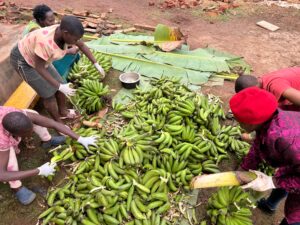
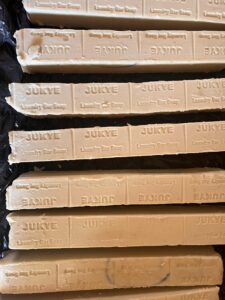
Phionah: Three things. First, banana soap—made from banana ash and natural oils. It’s long-lasting, eco-friendly, and affordable. Second, banana flour—nutritious, versatile, and made from overripe fruit. Third, and most important to me, biodegradable sanitary pads—made from banana stem fibers. They’re safe, comfortable, and designed for girls who’ve never had access to proper menstrual care.
RFN: That’s powerful. How has the community responded?
Phionah: They’ve embraced it. One woman told me recently, “Dear, the soap is kawa (slang for ‘good’). I still have a bar since last month.” Another said, “No need for more detergents.” Their feedback shaped our final formula. This isn’t consultation—it’s co-creation. We train women and youth to source banana waste, operate equipment, and distribute products. They own the process. They own the impact.
RFN: You mentioned menstrual health. Why is that central to your mission?
Phionah: Because it’s where dignity begins. I saw my sisters go through what I did—missing school, hiding, feeling ashamed. Menstrual health isn’t just hygiene—it’s education, confidence, and opportunity. If a girl misses three days of school every month, she’s losing almost a term a year. That’s unacceptable. Our pads are designed to change that.
RFN: You’re using astoundingly simple materials. What’s the science behind it?
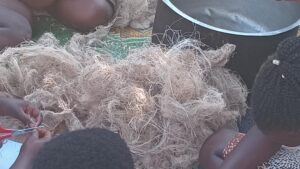
Phionah: Banana ash contains potassium hydroxide, which is a natural soap base. The fibers in banana stems are strong, absorbent, and biodegradable. We clean, layer, and shape them into pads. It’s low-tech but high-impact. We’ve tested prototypes in schools, and the feedback has been overwhelmingly positive.
RFN: What’s next for your project?
Phionah: Scaling. We need about UGX 92.5 million (USD 25,000) to expand production, acquire solar dryers and milling equipment, and set up a fiber-processing unit. We also want to train more women and youth groups and launch a national campaign around menstrual dignity. With the right support, we can take this model across Uganda—and beyond.
RFN: How do you see power shifting through your work?
Phionah: Power isn’t shared—it’s handed over. We don’t just train people to make soap or pads. We train them to run the value chain. From sourcing to selling, they lead. Girls help design the pads they’ll use. Women manage the production. Youth handle marketing. This is not charity—it’s transformation.
RFN: Final question. What drives you every day?
Phionah: The memory of that blanket slipping out in class. The laughter. The shame. And the girls who still live that reality. I want them to walk into school with confidence, not fear. I want them to know that their period is not a curse—it’s a sign of life. And that bananas, something they’ve always known, can be the answer.
RFN Closing Note: Phionah Nagaba isn’t just innovating—she’s rewriting the story of rural Uganda, one banana stem at a time. Her work proves that dignity can be engineered, that waste can be wealth, and that the future of menstrual health may just lie in the hands of a girl who refused to be silenced. For any assistance to scale her project up, reach her on +256774302656 or Email: pn********@***il.com.
Do you have a scientific innovation or research to share with the world? Reach us on ne**@***************ws.com and in**************@***il.com
About The Author