
KAMPALA – In January 1986, when the current administration of President Yoweri Museveni took the reins of power, the “Ugandan Water Story” was a grim narrative of dry taps, “ghost” connections, and a skeletal infrastructure consisting mostly of dilapidated colonial-era pipes.
At that time, the National Water and Sewerage Corporation (NWSC) was a struggling entity, gasping for survival with an asset base of just USD 12.6 million and a presence in only 7 major towns.
Fast forward to January 2026, and the numbers tell of a silent revolution in public utility management. Today, NWSC, under the leadership of Dr. Silver Mugisha, has expanded its footprint to 282 towns across the country, serving over 21 million Ugandans.
This 40-year journey is not merely about laying pipes; it is a masterclass in institutional “turnaround” and evidence-based transformation within the context of the transformational agenda of the revolutionary National Resistance Movement government.
The 1986 Baseline: A Corporation in Crisis
Data from the late 80s paints a bleak picture of urban life. Water coverage in major centers stood at a dismal 20%. The corporation managed roughly 26,000 connections nationwide, most of which were leaking, unmetered, or unbilled. Inefficiency was the hallmark of the era; for every 1,000 connections, NWSC required 36 staff members.
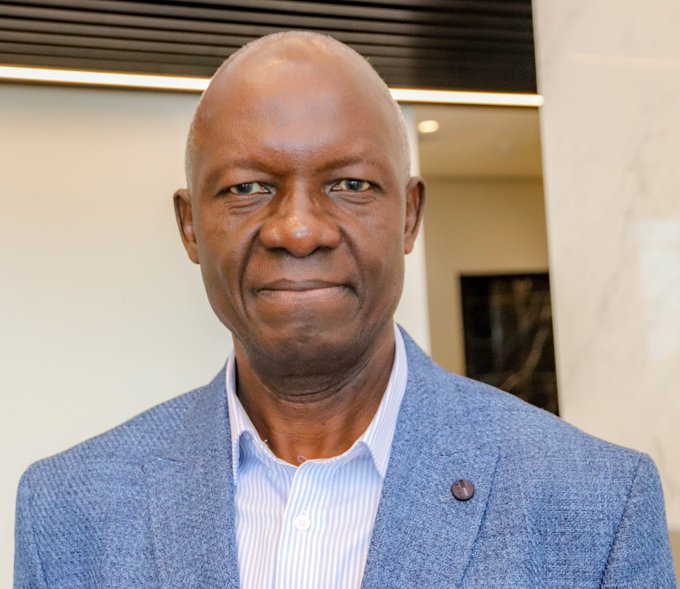
“Utilities need to be talking about ‘Next Practice,’ not just ‘Best Practice,'” says Dr. Eng. Silver Mugisha, the NWSC Managing Director, who has steered the corporation through its most aggressive expansion phase. Under his leadership, the corporation moved away from traditional bureaucratic lethargy toward a model of “brutal honesty” and “commercial viability.”
2026: The Efficiency Milestone
As of early 2026, the staff productivity ratio has been slashed from 36 to just 6 staff per 1,000 connections, even as the total number of connections has surged past 995,000. The asset base has ballooned from that initial 43 billion shillings in 1986 to a staggering 4.35 trillion shillings as per the 2024 statistics.
The secret behind this growth lies in a series of sstrategic ddirections over the past 40 years and the “SCAP100” project, which aimed at 100% service coverage in all towns under NWSC. In the financial year 2024/25, the corporation reported its strongest financial performance with an operating surplus of UGX 162 billion, a 14% improvement from the previous year.
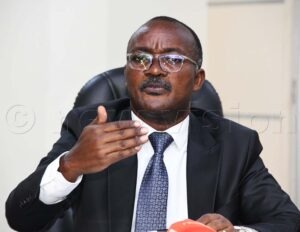
“We are deliberate as a corporation,” Dr. Mugisha recently noted during a performance review. “Our results show that efficiency and accountability can drive tangible improvements in service delivery. We have tightened all loopholes and focused on homegrown innovation.”
His views reflect what President Museveni has emphasized over the past 40 years. He has consistently provided political direction to the corporation, emphasizing improving clean water access in Uganda, and pledging village-level water sources like boreholes, piped systems, achieving 82% in some districts by this year.
The “Homegrown” Digital Revolution
A key pillar of this 40-year success story is the corporation’s move toward self-reliance. While many African utilities spend millions on foreign IT consultants, NWSC built its own billing and payment systems using local engineers.
“What any human being has done anywhere on Earth, we should be able to do here,” Dr. Mugisha told a gathering of engineers in late 2025. “Our in-house systems are so resilient that when we faced a cyber-attack recently, we were able to restore services within 24 to 48 hours. If we had imported those systems, we would have faced months of business discontinuity.”
This digital shift has translated into direct benefits:
· Water Network: Expanded to over 23,700 kilometers.
· Public Stand Pipes: Over 31,000 installed, serving over 4 million urban poor at a subsidized rate of UGX 21 per jerrycan.
· Revenue Growth: Annual turnover has grown from a few billion shillings in the 80s to over UGX 650 billion today.
Major Infrastructure: The Katosi Giant
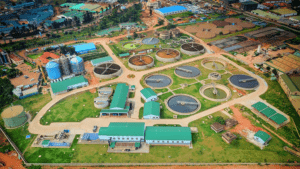
The crowning jewel of the recent decade is the Katosi Water Works. Producing 160 million liters of water daily, it has effectively ended the chronic water shortages in the Greater Kampala Metropolitan Area. Coupled with the Ggaba plants, it ensures that the capital’s water security is guaranteed for the next generation.
The Road Ahead: Challenges and 2030 Goals
Despite the celebration, the data highlights areas requiring urgent attention. While water coverage has reached 80%, sewerage services still lag at about 7%. Urban sanitation remains a significant bottleneck, with 95% of customers still relying on pit latrines or septic tanks that are not integrated into the national grid.
Furthermore, “debt age” remains a thorn in the corporation’s side. While private citizens pay their bills in an average of 2.5 months, government Ministries, Departments, and Agencies (MDAs) often take over 15 months to settle accounts.

“Our goal by 2030 is 95% coverage and reaching 1.2 million connections,” Dr. Mugisha asserts. “But this requires that everyone—including government entities—pays for the water they consume. Water is a right, but the science of producing and transporting it costs money.”
As Uganda marks 40 years of progress, NWSC stands as a testament to what a public utility can achieve when it blends political will with corporate discipline. From 7 towns to 282, the numbers prove that the “thirsty years” are largely behind us.
About The Author