KAMPALA — Researchers in Uganda have found reasons to explain current power outages (loadshedding) in Uganda, and the timing could not be more poetic – or more urgent.
Conducted in 2023, the study led Ms. Adella Grace Migisha of Makerere University Business School (MUBS), unearthed a decade -long data that explains the current power outages and could inform actionable strategies if it were utilized.

Titled Effects of technical and security factors on grid electricity reliability: evidence from Uganda national electricity grid network, the other co-researchers were was Joseph Mapeera Ntayi, Joyce Abaliwano and Livingstone Senyonga from MUBS, Faisal Buyinza, from Makerere University and Muyiwa S. Adaramola from the Norwegian University of Life Sciences.
The study was published in Technological Sustainability, a leading interdisciplinary journal publishing papers in the areas of scientific and technological approaches to sustainability.
Using a rigorous explanatory design and analyzing thousands of data points from SCADA software, the study provides a comprehensive look at the technical and security hurdles facing Uganda’s national grid.
It covered the decade from 2012 to 2022, with the research moving beyond surface-level complaints to identifying exactly why the lights go out and, more importantly, why they stay out for so long. The team distinguished between two critical parts of the power journey: the high-voltage transmission lines and the local distribution network. The findings are a stark indictment of two decades of under-investment in a quality grid.

In the distribution subsystem alone, the part that actually enters your home, researchers recorded a staggering average of 2,307 outages, with a cumulative duration of 5,826 hours. The research identifies three primary “demons” that continue to haunt this grid:
The first is the wooden pole myth which the study found aged, explaining the equipment failure. The study found out that equipment failure stems from low-quality, aging wooden poles.
“A one percent increase in such failed equipment leads to a 10% jump in outage frequency,” the researchers concluded.
The second demon was identified a ‘Technical Faults.’ The study found that that operational errors in the transmission subsystem cause massive disruptions and a one percent increase here resulted in a 46% spike in blackouts.
The third demon was found in what the researchers termed as ‘system ooverload.’ The study found that frequently triggered by illegal connections, these overloads cause sudden line tripping, particularly in the distribution network.
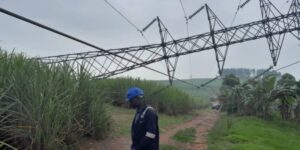
However, the most alarming finding is the impact of theft and vandalism. Unlike technical faults that engineers can reset, security failures require complete reconstruction.
“In the transmission subsystem, acts of sabotage led to a 31% increase in the duration of outages,” the study noted, further revealing that these deliberate human actions are the primary reason Ugandans experience prolonged periods of darkness.

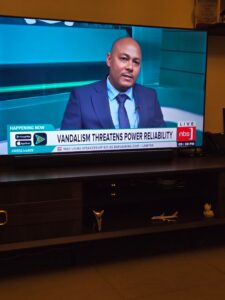
This possibly explains the recent partnership between Nation Media Group and the Uganda Electricity Transmission Company Limited (UEDCL) to counter power thefts and vandalism.
Leaders from both institutions met to strengthen a partnership aimed at increasing public awareness about electricity infrastructure and the dangers of vandalism that has been blamed for unending power outages.
The partnership which will focus on public education, anti-vandalism campaigns, community engagement, and improved communication during power outages, is aimed to ensure timely and accurate information to the public.
Timely study?
This research arrives at a pivotal crossroads. In April 2025, the government assumed full control of distribution, yet 2026 has been characterized by the erratic supply and voltage fluctuations cited in recent Electricity Regulatory Authority (ERA) reports.
While the government is currently pumping US$50 million into the Amari Power Transmission project to upgrade substations in Tororo and Mbarara, this study reminds us that throwing money at the grid is insufficient without decentralizing ownership.
In view of this, the researchers propose a roadmap of steel, soil, and community. They argue that replacing wooden poles with steel, shifting to underground cables to thwart vandals, and empowering communities to protect local transformers, would significantly cut power losses.
This aligns with the spirit of the Parish Development Model (PDM), making the local person the first line of defence against darkness.
“As we look toward 24,000 MW of nuclear dreams by 2040, we must first fix the 132kV lines currently being stripped by vandals,” Ms. Migisha tells Research Finds News in an interview.
“If we are to achieve the economic growth projected for the late 2020s, our policies must finally kneel before the evidence of this rigorous decade-long inquiry. Access to reliable electricity is the foundation of poverty reduction; without it, we are simply planning in the dark,” she adds.
Background
Access to reliable electricity services is crucial for poverty reduction and also promotes economic growth, according to successive by the World Bank and the International Energy Agency.
These reports further reveal a grim picture of the global status. They observe that globally, over 1 billion people lack access to a reliable electricity supply, of which approximately 62% reside in sub-Saharan Africa.
As a result, an unreliable electricity supply forces companies (industrial and commercial) to spend extra money to provide alternative sources of power, thus leading to reduced revenues and hindered venturing into new markets especially in areas with unreliable electricity supply.
For households, such as those in Uganda which are expected to benefit from the PDM fortunes, unreliable electricity supply limits the use of electricity for both productive and non-productive uses, leading to an over-dependence on forest-based energy resources to meet their energy needs, the researchers observe in the study.
At the community level, unreliable electricity constrains the provision and delivery of efficient healthcare services, which often escalates illegal connections to the power grid.
“These power outages have had a huge impact on the socioeconomic activities of countries and communities, such as Uganda and over 30 countries in Africa have lost between 1% and 5% of their GDP annually as a result of power outages,” the study notes further.
Uganda is one of the countries that suffer from electricity shortages and as a result, sectors such as residential, manufacturing, agriculture, transport as well as service sectors that depend to a large extent on grid electricity in particular to function continue to suffer.
As we navigate the turbulent waters of 2026, where the “Big Switch” from Umeme to state-run distribution under the UEDCL has left many still fumbling for candles, this seminal study emerges as the evidence-based conscience our energy sector desperately needs.
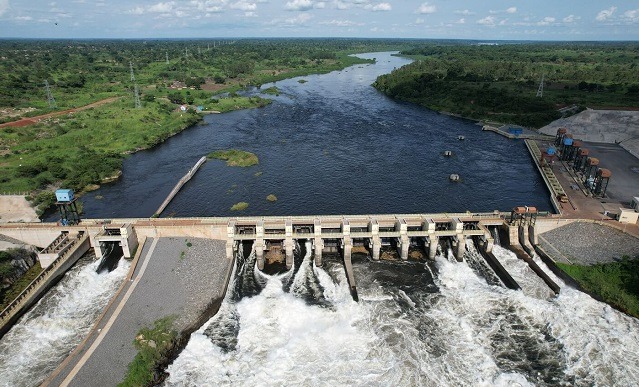
Meanwhile, the CEO at Uganda Electricity Transmission Company Limited, Richard Matsiko, recently noted that the country continues to invest in national and regional power interconnection projects in order to cause a sustainable and reliable electricity supply.
::::::::::::::::::::::::::
EDITOR’S NOTE: To access the full study, visit: https://doi.org/10.1108/TECHS-08-2023-0030 or CONTACT the authors at: bu**********@***il.com
About The Author