
KAMPALA — Speaker of Parliament Rt. Hon. Jacob Marksons Oboth-Oboth is expected to lead a high-level dialogue between Parliament, universities and agricultural researchers aimed at strengthening the use of scientific evidence in shaping Uganda’s agricultural policies and development programmes.
The engagement, organised by the AgriFoSe2030 Uganda Hub in collaboration with Kyambogo University, will bring together legislators, academics, international researchers and other stakeholders to explore how scientific research can be translated into practical solutions for agriculture, food security and rural development.
Held under the theme “Strengthening the Interface between Science, Policy and Practice for Sustainable Agricultural Transformation in Uganda,” the November 12, 2026 engagement seeks to address the longstanding gap between research generated by universities and its utilisation in national policy formulation and implementation.
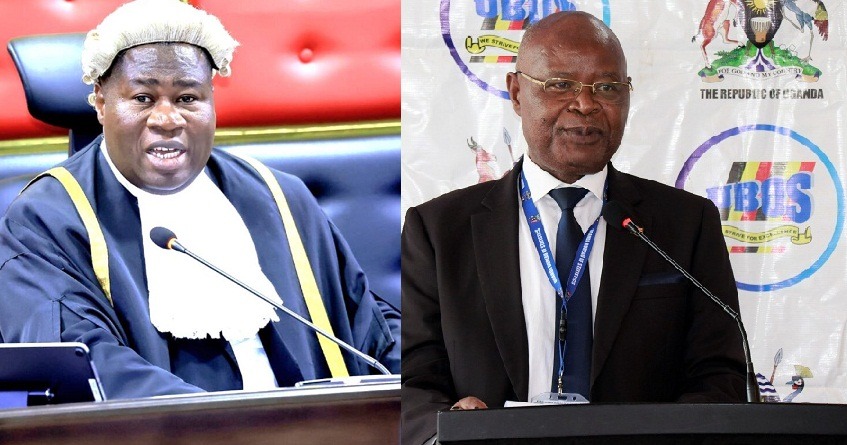
Oboth-Oboth’s participation places Parliament at the centre of discussions on how evidence from research institutions can inform legislation, parliamentary oversight, resource allocation and national development priorities.
Parliament plays a critical role in shaping Uganda’s agricultural and food systems through lawmaking, appropriation, representation and oversight. However, researchers and development practitioners continue to face challenges in ensuring that scientific findings reach policymakers in accessible, timely and practical formats.
The dialogue is therefore expected to explore more structured channels through which researchers can share evidence with legislators, particularly parliamentary committees responsible for agriculture, food security, climate resilience and related development sectors.
Bridging the Research-Policy Gap
According to the concept note reviewed by ResearchFinds Team, the engagement will also introduce the AgriFoSe2030 Uganda Hub and explore the establishment of a Centre of Excellence for evidence-based research and policymaking.
The proposed centre is intended to provide a sustainable institutional platform for regular engagement between Parliament, universities, research institutions and practitioners.
Among the proposals to be discussed are mechanisms for researchers to provide concise, accessible research findings to relevant parliamentary committees, strengthening MPs’ understanding of scientific evidence and encouraging legislators to participate in university research dissemination activities.
The organisers also want researchers to better understand parliamentary processes and the kind of evidence legislators require when debating policies, scrutinising government programmes and making decisions affecting communities.
The discussions will cover agriculture, food security, climate resilience, rural livelihoods, gender equality and youth participation in agricultural development.
High-Level Academic and Policy Panel
The dialogue will feature a distinguished panel of Ugandan and international academics, policymakers and development experts.
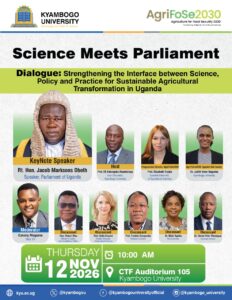
Kyambogo University Vice Chancellor Prof. Eli Katunguka Rwakishaya will host the engagement, while Prof. Elisabeth Hjalmar of the Swedish University of Agricultural Sciences, who serves as AgriFoSe2030 Programme Director, will also participate.
Dr. Judith Irene Nagasha, the AgriFoSe2030 Uganda Hub Leader, will represent the programme’s local leadership.
The keynote address will be delivered by Speaker Oboth-Oboth, while the discussions will be moderated by Canary Mugume of NBS Television.
The panel of discussants includes: Hon. Norbert Mao, Minister of Justice and Constitutional Affairs, Prof. Sofia Boqvist, Swedish University of Agricultural Sciences, Prof. Freddie Ssenyonga, Makerere University, Dr. Alidi Agatha, Gulu University, and Dr. Simon Peter Musinguzi, Kyambogo University.
The participation of the Justice Minister, alongside university researchers and international experts, is expected to broaden discussions on institutional collaboration and how evidence can be incorporated into public decision-making.
AgriFoSe2030’s Experience in Uganda
AgriFoSe2030 (Agriculture for Food Security 2030) is an international programme dedicated to strengthening the contribution of science to sustainable agricultural development, food security and improved livelihoods.
The programme is placing greater emphasis on institutionalising science translation through university hubs in Africa, including Uganda, Kenya and Zimbabwe.
In Uganda, the hub is jointly managed by Kyambogo University and Gulu University, working alongside Makerere University and other academic, government, community and development partners.
The programme has previously supported training in translating science into policy and practice, equipping researchers with skills in policy engagement, stakeholder mapping, science communication and research-impact assessment.
Its interventions have included research involving smallholder livestock farmers to improve milk safety, value addition and marketing, particularly among women and young people, as well as initiatives aimed at building more resilient urban food systems.
The organisers argue that producing quality research is not enough unless deliberate mechanisms are established to ensure that findings reach policymakers, practitioners and communities capable of translating them into action.
Towards Sustainable Institutional Partnerships
Beyond the November 12 engagement, AgriFoSe2030 wants to establish lasting working relationships between Parliament and Uganda’s research institutions.
The proposed collaboration is expected to extend beyond the programme’s current implementation period by creating opportunities for continuous science-policy dialogue, research dissemination and engagement between legislators and academics.
For Parliament, stronger access to scientific evidence could support more informed debates, legislative interventions and oversight of agricultural programmes.
For universities, closer engagement with legislators could help researchers identify national policy priorities and direct research towards challenges affecting farmers, businesses and communities.
The organisers hope the engagement will lay the groundwork for a stronger relationship between science and policymaking, ensuring that Uganda’s investment in research translates into practical solutions for agricultural transformation, food security and sustainable development.
About The Author