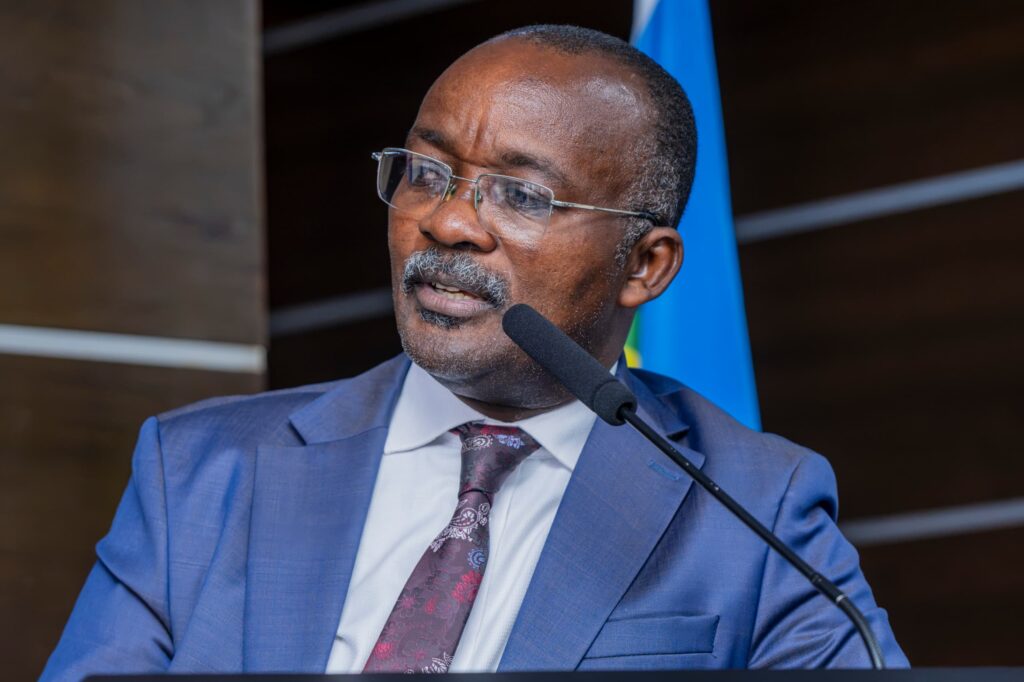
KAMPALA: The National Water and Sewerage Corporation (NWSC) is seeking Shs650 billion from government to expand water production and supply systems in 50 towns, as rising demand puts increasing pressure on existing infrastructure.
The proposed financing package consists of a Shs500 billion concessionary loan and a Shs150 billion revenue grant.
Under the arrangement, the Shs500 billion loan would carry an annual interest rate of 2%, with a two-year grace period and a 20-year repayment period. NWSC says it would service the loan from its own revenues.
The funds would be released in five equal annual tranches of Shs130 billion during the 2027/28 to 2031/32 financial years.
The request has received government backing from the new Minister of Water and Environment, Gen. Kahinda Otafiire, who pledged support for the expansion programme during his maiden visit to NWSC’s International Resource Centre in Bugolobi on Thursday, August 28, since taking charge of the ministry in May.
Otafiire told NWSC management and staff that providing clean and reliable water to Ugandans was a national responsibility that could not be left to technocrats alone.
He also challenged the corporation to move beyond short-term planning and develop plans covering at least 20 years to keep pace with population growth and increasing demand for water.
While commending NWSC’s leadership as capable managers, Otafiire warned that institutions in Africa can fail not because they lack intelligent people, but because of weaknesses in management and execution.
“In Africa we have intelligent people with poor management skills,” Otafiire said.
He urged NWSC to motivate and retain workers with specialised skills, saying the corporation could not afford to lose valuable expertise.
Why NWSC needs the investment
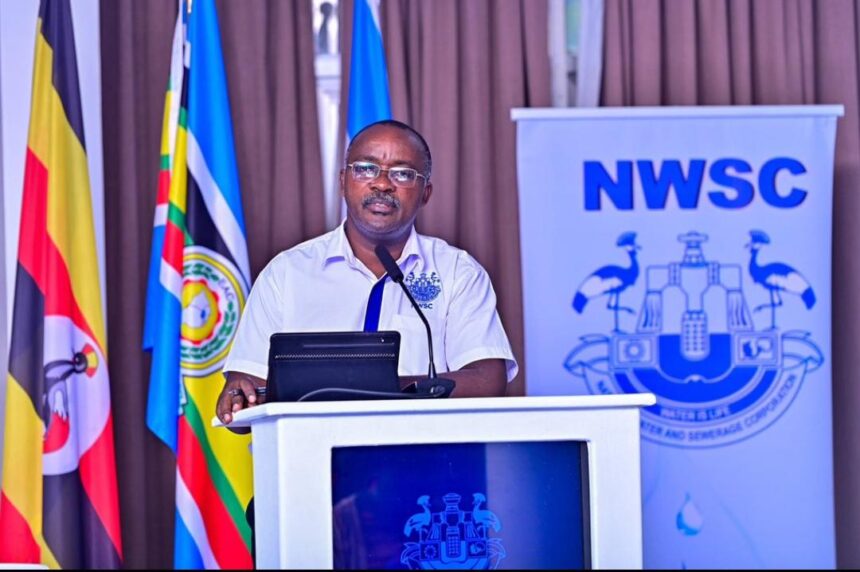
The financing request is anchored in the 50 Towns Water Supply Improvement Project presented by NWSC Managing Director Dr Silver Mugisha.
Mugisha said the project was developed following a request by Otafiire for NWSC to prepare a strategy for improving water supply in selected towns.
The NWSC board has reviewed and approved the concept, with amendments, and will forward it to the ministry before implementation.
According to Mugisha, NWSC’s average capacity utilisation has reached 85%. At this level, the corporation says customers increasingly begin experiencing water shortages.
The proposed Shs650 billion investment would finance water production systems, electro-mechanical equipment, transmission mains, storage reservoirs, distribution networks and water-quality monitoring systems.
The 50 towns are spread across NWSC’s four regions.
The Central Region, which has 14 towns under the programme, has been allocated Shs202 billion. Another 14 towns in the Eastern Region would receive Shs178 billion, while eight towns in the Northern Region would receive Shs90 billion.
The Western and South-Western regions, covering 14 towns, would share Shs180 billion.
Individual allocations would range from Shs10 billion to Shs30 billion, depending on the size and requirements of each water system.
NWSC’s expansion
Mugisha also highlighted the scale of NWSC’s expansion over the past decade.
He revealed that the corporation currently faces an investment financing gap of about Shs1.436 trillion, illustrating the resources required to keep pace with its expansion.
According to Mugisha, NWSC has grown from serving 23 towns in 2013 to 293 towns as of June 30, 2026.
The utility now serves more than 22 million people, while customer connections have increased from about 300,000 to more than one million.
Its turnover has also risen from Shs120 billion to Shs680 billion, while its assets have grown from Shs580 billion to about Shs5 trillion.
Mugisha attributed the growth to efforts to reduce the cost of doing business and the development of in-house systems and expertise.
He appealed to Otafiire to ensure that public institutions are not forced to adopt expensive external systems where local expertise is already available.
Push for local production
Otafiire also promised government support for NWSC to establish local assembly plants for critical water-sector materials, including pipes and meters.
He said global conflicts and disruptions in international supply chains had made self-reliance increasingly important.
Mugisha separately asked the minister to support local production of materials currently imported by NWSC, including soda ash, polymers, meters and generators.
He also asked for support towards solarising NWSC’s power systems as part of efforts to reduce the corporation’s energy costs.
More water infrastructure planned
In a separate presentation, Johnson Amayo said NWSC’s pipeline network had expanded to approximately 24,000 kilometres, while customer satisfaction stood at 82%.
He highlighted the Katosi water treatment plant, whose capacity has been increased to 240 million litres.
Amayo said discussions were underway with the Ministry of Finance for an additional 80 million euros to expand water intake and evacuation capacity.

He also pointed to the Service Coverage Acceleration Project, under which about Shs30 billion annually is being channelled towards ensuring every village has access to a water point.
Representing the Permanent Secretary at the Ministry of Water and Environment, John Mary Vianne Twinomujuni also pledged the ministry’s support, describing NWSC as one of its best-performing institutions.
He said the ministry would guide the corporation through the necessary processes to ensure that the 50 Towns Water Supply Improvement Project is implemented in accordance with government requirements.
The proposed investment therefore comes as NWSC seeks to expand infrastructure while managing growing demand, rising operational requirements and a financing gap estimated at Shs1.436 trillion. If approved and implemented as proposed, the Shs650 billion package would target increased production, transmission, storage and distribution capacity in 50 towns across the country.
About The Author