KAMPALA, Uganda — Fish farmers in Uganda will be proud to learn there’s opportunity to make money beyond the fresh water lakes, following a ground-breaking census by the Uganda Bureau of Statists (UBOS).
A landmark census dataset released last week by the Uganda Bureau of Statistics has given that vision something it previously lacked: hard numbers and they paint a picture that is both thrilling and deeply worrying in equal measure.
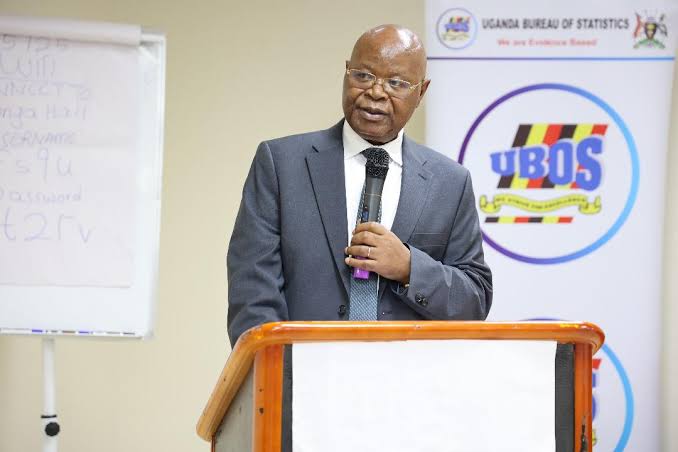
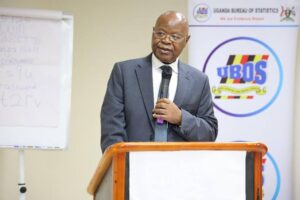
The Uganda Aquaculture Census 2025, released on April 30, 2026 at Statistics House in Kampala, is Africa’s first comprehensive, government-led count of fish farms.
It found 9,463 aquaculture farms spread across the country, producing 65,444 metric tonnes of farmed fish in the twelve months to June 2025. For the first time, Uganda and anyone thinking of investing in its blue economy has a verified, nationally representative baseline to plan against.
But buried inside these impressive numbers is a problem that could quietly strangle this industry before it reaches its potential: nearly half of Uganda’s fish farmers are operating completely in the dark, without a single visit from a government adviser or technical expert.
A President Who Has Made Fish Farming Personal
Museveni has made aquaculture a personal cause that goes beyond political messaging. He has shown videos of his own model fish project in Lango — which he claims generates up to Shs 140 million annually from a single acre — at rally after rally, urging communities to stop waiting for handouts and start digging ponds.
When President Yoweri Museveni stood before thousands of people in Serere District in November 2025 and declared he wanted to turn Uganda’s wetlands into a fish-farming goldmine, many dismissed it as the usual colour of campaign season.
In April 2026, speaking at the NRM Parliamentary Retreat in Kyankwanzi, he went further, announcing a large-scale nationwide fish farming programme and being blunt about why existing mechanisms fall short.
“These wetlands we have cannot be effectively utilised using the Parish Development Model funds alone,” he told MPs. “The Shs 1 million is not enough. It requires machinery and organised state support.”
That was a significant admission, the President acknowledging that asking ordinary Ugandans to jump into fish farming without structured support is a recipe for expensive failure.
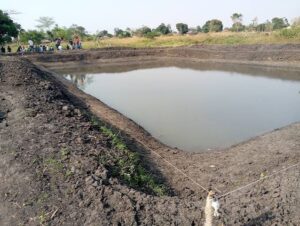
The push is also deliberately tied to wetland restoration. In Pallisa District, the Limoto Fish Farm of 26 ponds established with UPDF support, is already proving that fish farming along wetland edges is more profitable than rice farming while actively protecting the wetland itself.
Where rice yields roughly Shs 200,000 per acre after six months, well-managed fishponds on the same land generate millions. On Labour Day 2026, Museveni pledged targeted funding for fish farmers in the 2026–27 financial year and called for mandatory registration of all fish farmers so that support reaches the right people.
What the Census Found
Of the 9,463 farms recorded, 6,308 are in rural areas where small-scale operators dominate. Yet urban farms, though fewer, account for 72.1 percent of total national production, a single statistic that tells the whole story about what access to expertise and markets means in practice.
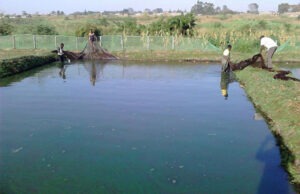
Tilapia rules without contest: 53,924 tonnes, or 82.4 percent of all production, comes from 7,555 tilapia farms. Catfish contributes 17.3 percent. The dominant system is the earthen pond, used by 8,738 farms, though cage culture is growing on Lake Victoria. Uganda already exports to Kenya, the DRC, South Sudan, and Rwanda, and this census gives that trade a verified production figure for the first time.
Who Is Leading — and Who Is Falling Behind
Buganda sub-region leads nationally with approximately 1,250 fish farms, a dominance rooted in history, the first fish farming extension programme in Uganda concentrated its 1,500 ponds in Buganda and Kigezi as far back as 1956.
Busoga, Ankole, and Tooro follow as the next strongest sub-regions. At the other end, Sebei records the lowest fish production in the country, a reflection of higher altitude and cooler temperatures, though not an insurmountable barrier with the right species.
Kampala district has the fewest farms of any district, just 20, pointing to an unexplored opportunity in tank and cage farming that Uganda’s urban entrepreneurs have barely considered.
The Wound in the Industry
The census exposes a support failure so stark it demands to be named plainly. Only 53.3 percent of farms accessed any extension services, government advisers, technical training, or professional guidance, between July 2024 and June 2025. The remaining 46.7 percent, roughly 4,500 farms, received nothing.
State Minister for Finance Amos Lugolobi captured the human cost of this at the launch. “I know someone who lost billions because he lacked technical support. He was told to farm Nile perch which simply cannot be done here. As for me, I tried fish farming but lacked an expert on feeds.”
A senior government minister admitting that even he could not navigate fish farming without proper support is a remarkable moment of candour. The infrastructure gaps compound everything: of 24,348 fishponds recorded, about 7,240 nearly one in three were completely unstocked.
Hatcheries produced only 149.9 million fingerlings against a capacity of 200.1 million, a 25 percent shortfall.
What Other Countries Built — and What Uganda Could
China earns over $130 billion annually from aquaculture. Norway turned salmon farming from nothing in the 1970s into a $16 billion export industry.
Egypt, not a country one associates with fish farming, is today Africa’s largest aquaculture producer at over one million metric tonnes a year. None of these were accidents. All were built on decades of consistent state investment in farmer training, seed technology, rural credit, and market infrastructure.
Uganda’s 65,444 tonnes is a fraction of those figures, but the trajectory is the point. In 2005, Uganda produced 15,000 tonnes.
The sector has grown more than fourfold in two decades. With verified data now in hand, regional markets hungry for protein, and a government that has finally declared its financial intention, the next leap is a policy choice not a pipe dream.
The Data Is There. Now What?
Uganda has the wetlands, the climate, the markets, and now the numbers. What the census makes painfully clear is that the industry cannot grow on enthusiasm alone.
Nearly half its farms have never received professional support. A quarter of its ponds sit empty. Its hatcheries are running below capacity. These are solvable problems but only with deliberate action.
The census gives government no excuse for vagueness. It knows exactly which regions are leading and which are lagging. It knows how many farmers need help and where the fingerling bottlenecks are.
The question Uganda now faces is simple: will the implementation match the ambition or will another five years pass with 4,500 fish farms still waiting for someone to come and help them fish?
EDITOR’S NOTE: Primary source: Uganda Aquaculture Census (UAC) 2025 Report, UBOS, released April 30, 2026. Access the full report at www.ubos.org
About The Author