Kampala, July 28, 2026: When Uganda’s Ministry of Health discharged its last Ebola patient from the Mulago National Referral Isolation Centre on July 16, the country did more than close out a public health emergency.
It marked the culmination of a scientific and operational effort that international health officials are now holding up as a model for outbreak response on the continent.
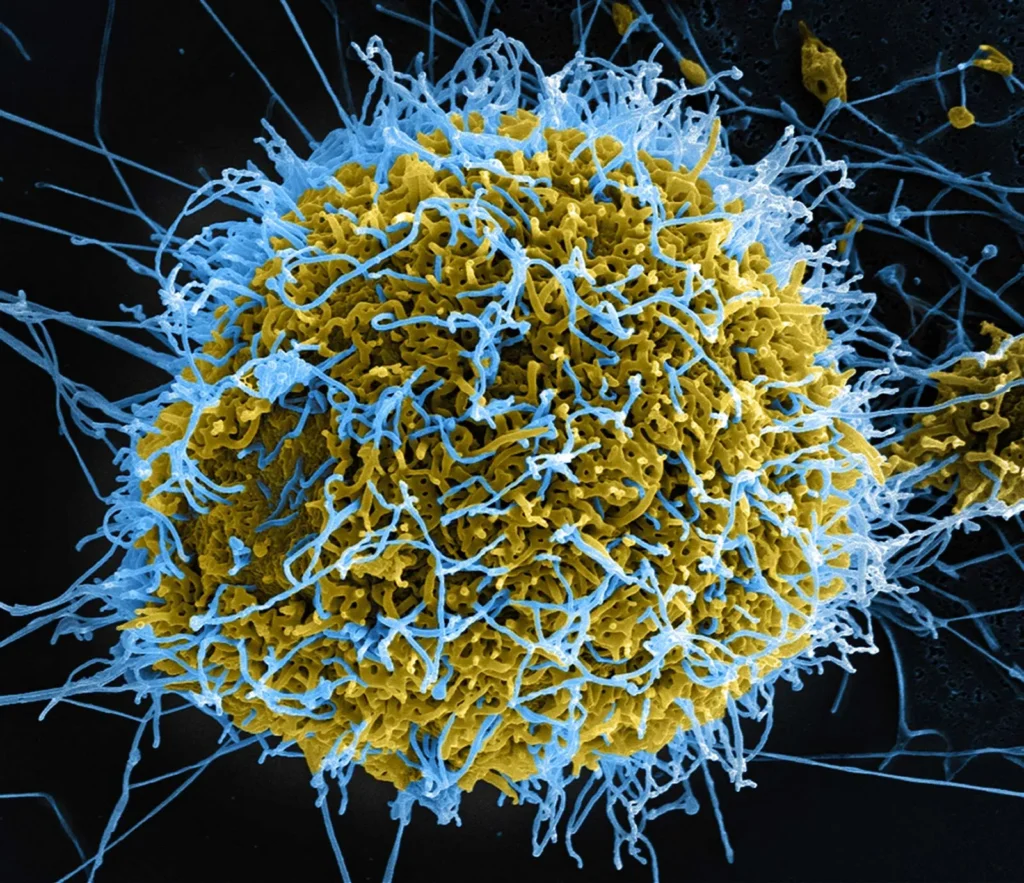
The outbreak, caused by the Bundibugyo ebolavirus (BDBV), a rarer and less-studied relative of the Zaire strain behind West Africa’s devastating 2014–16 epidemic, was first detected in Uganda in mid-May, linked to an imported case from a fast-growing outbreak across the border in Ituri Province, Democratic Republic of Congo.
By the time Uganda’s last patient walked out of isolation, the country had recorded 20 confirmed cases and two deaths: a case fatality rate of roughly 10%, well below the 30–50% historically associated with BDBV outbreaks.
Health Minister Dr. Chris Baryomunsi credited the outcome to early reporting and rapid case management. He said patients who sought care as soon as symptoms appeared stood a markedly better chance of survival, a message the ministry pushed hard through community engagement teams throughout the response.
Now, a genomic sequencing by Ugandan researchers and their Canadian counterparts reveals a previously unrecorded lineage of Bundibugyo ebolavirus, even as Uganda posts one of the lowest fatality rates ever recorded for the strain.
Researchers from Uganda’s Interdisciplinary Consortium for Epidemic Research (ICER) and the Ministry of Health, working with international collaborators including a genomics team in Canada, have sequenced the genome of the virus isolated from Uganda’s imported case and compared it against samples from the two previous documented BDBV outbreaks; Uganda in 2007 and DR Congo in 2012.
What they have found is surprising. The virus circulating in the current outbreak did not fit neatly into either of the two known lineages.
“Instead, our phylogenetic analysis has placed it on an entirely new branch of the BDBV family tree, distinct from both historical clades,” reveals Col. Dr Henry Kyobe, one of the researchers on the team.
The findings were published as a Correspondence in The Lancet on July 15, 2026, under the title “Bundibugyo ebolavirus from the 2026 Ebola outbreak in Uganda and DR Congo: a new variant.”
The work carries weight beyond academic classification. BDBV has no licensed vaccine and no approved virus-specific therapeutic, unlike its Zaire cousin, for which monoclonal antibody treatments exist.
But because those existing antibody treatments were developed against a different Ebola species, their effectiveness against BDBV, let alone this newly identified variant, remains unknown.
Discovering that the virus is diversifying beyond the two lineages scientists had used as a reference point complicates efforts to design countermeasures that will hold up against future outbreaks.
“These findings underscore the diversity of the BDBV ecosystem,” the study authors wrote, adding that the result points to an urgent need for antiviral and vaccine development alongside sustained public health measures to contain the virus’s spread.
The Correspondence was led by Dr. Misaki Wayengera of Makerere University’s College of Health Sciences, who also serves in Uganda’s Ministry of Health, together with joint first authors Alisen Ayitewala of Uganda’s Central Emergency Surveillance and Response Laboratory and Adrienne Amuri-Aziza of the Institut National de Recherche Biomédicale in Kinshasa.
The Ugandan genomic sequencing effort drew on scientists at the Ministry of Health’s Central Emergency Surveillance and Response Laboratory, the Interdisciplinary Consortium for Epidemic Research (ICER), the Uganda Virus Research Institute, and Makerere University, including Andrew Nsawotebba, Isaac Ssewanyana, Suzan Nabadda, Stephen Kanyerezi, Henry Kyobe Bosa, Wilber Sabiiti, Winters Muttamba, Barnabas Bakamutumaho, and Bruce Kirenga, alongside Uganda’s Director General of Health Services Charles Olaro and former Health Minister Jane-Ruth O. Aceng.
The study also reflects a significant Canadian contribution.
A team at Dalhousie University in Halifax, Nova Scotia, Anuj Kumar, Mansi Dutt, Gustavo Sganzerla Martinez, and David J. Kelvin, carried out much of the genomic and phylogenetic analysis that identified the new clade, working alongside Congolese and Belgian collaborators from the Institut National de Recherche Biomédicale, Université de Kinshasa, and the Institute of Tropical Medicine in Antwerp.
Kelvin holds the Canada Research Chair in Translational Vaccinology and Inflammation, and the Dalhousie-based analysis was supported by the Li Ka Shing Foundation.
The discovery also reinforces a broader case that regional health bodies have been making since the outbreak began: that genomic surveillance capacity built up in Uganda over previous outbreaks, including Ebola Sudan in 2022 and repeated Marburg virus incidents, is now paying dividends.
Rather than sending samples abroad and waiting weeks for results, Ugandan laboratories were able to sequence and classify the virus domestically within days, giving responders real-time insight into how the pathogen was evolving even as they worked to contain it.

Uganda has now entered the World Health Organization’s mandatory 42-day countdown, during which health authorities must confirm no new cases emerge before formally declaring the outbreak over, a milestone expected in late August if surveillance holds.
WHO’s Africa regional office has praised the response as evidence that, in the words of Ugandan officials, Ebola is defeatable when countries combine vigilance with strong health systems.
Across the border, the picture remains far graver. DR Congo has continued to report a rapidly rising caseload, with confirmed infections running into the thousands and a death toll many times higher than Uganda’s, driven in part by insecurity and humanitarian pressures that have hampered contact tracing in Ituri and neighboring provinces.
For Ugandan scientists, the new BDBV clade is now a priority research target: understanding how and why it emerged, and whether related lineages are silently circulating in wildlife reservoirs along the DRC border, may prove critical to catching the next spillover before it crosses into a major population center again.
For more on this story, read the full paper here: https://www.thelancet.com/journals/lancet/article/PIIS0140-6736(26)01079-2/fulltext
About The Author