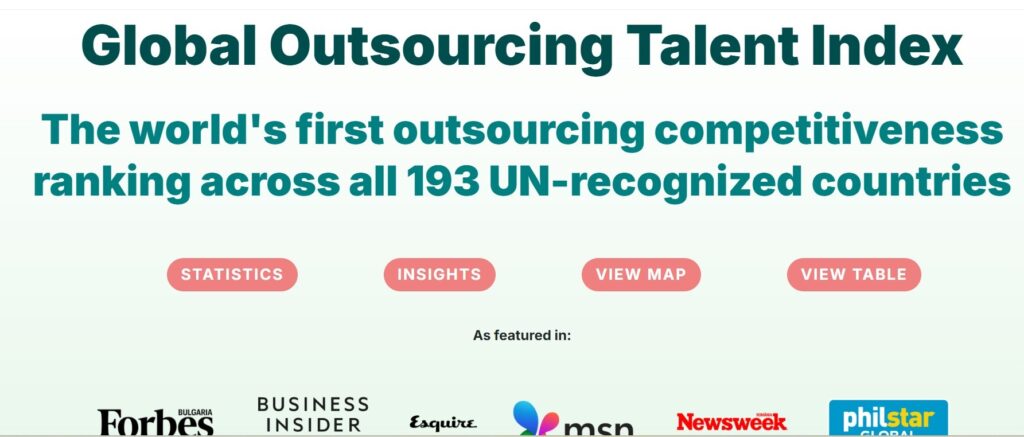
KAMPALA, Uganda — A new global index covering all 193 UN-recognized nations has placed Uganda among the top 25 most competitive Business Process Outsourcing (BPO) destinations on Earth.
BPO is a business practice where a company hires an external service provider to handle essential operations or tasks instead of doing them in-house.
Instead of managing everything internally, companies “outsource” these roles to specialized firms—often in lower-cost countries with large, skilled workforces.
The ranking arrives as the Ministry of ICT and National Guidance pushes a bold policy to create 150,000 jobs by turning young Ugandans into the country’s newest export—welcome news according to Permanent Secretary Dr. Aminah Zawere.
The International global staffing firm Ataraxis published its Global Outsourcing Talent Index, from a study last updated in January 2026. For a country traditionally associated with agriculture and tourism, the results are striking.
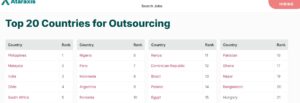
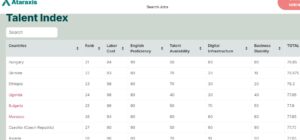
Uganda secured the 24th position globally with an overall score of 77.95 out of 100—sitting ahead of Bulgaria (25th), Morocco (26th), the Czech Republic (27th), China (37th), and significantly outpacing the United States, which trails at 86th.
“The result is not an accident. It is the product of a decade-long campaign by our ministry to transform the country into a destination for global business process outsourcing,” says Dr. Zawedde.
Behind the Scores
The index, featured in Forbes, Business Insider, Newsweek, and Esquire, evaluated countries across five weighted factors: Labour cost: 52.5% of the score, English proficiency: 20%, Talent availability: 17.5%, Digital infrastructure: 5% and Business, legal, and political stability: 5%
Uganda’s impressive placement is anchored by two exceptional metrics: a labor cost score of 98 out of 100—one of the highest in the entire index—and an English proficiency score of 80 out of 100.
“These two factors together constitute nearly three quarters of the total score, and Uganda excels in both,” reveals Dr. Zawedde.
The commercial implications are massive. A Ugandan graduate working in a call center, coding firm, or back-office support role costs a fraction of what the same worker costs in the UK, US, or Australia, while communicating fluently in English.

Conversely, Uganda scored 30 out of 100 for digital infrastructure and 40 out of 100 for business stability, highlighting challenges like unreliable electricity and inconsistent rural broadband.
“But in the weighted calculation, these factors carry comparatively little influence on the final score—and the government is actively working to close those gaps,” Dr. Zawedde notes.
Regional Standings
Regionally, Uganda is the fourth-ranked African country in the index. South Africa leads the continent at 5th globally, followed by Nigeria (6th) and Kenya (11th).
Remarkably, Uganda achieved 24th place without the established infrastructure of Nairobi’s iHub ecosystem or South Africa’s decades-old call center industry. Meanwhile, its neighbors trail significantly: Tanzania ranks 100th, and Rwanda sits at 145th.
A Decade of Deliberate Action
Ten years ago, Uganda’s BPO sector was effectively non-existent. There was no national strategy or trained talent pipeline. Growth was organic, fragmented, and largely invisible to global markets.
The turning point came when the Cabinet approved a National Business Process Outsourcing Policy, formally launched in February 2025 by the then Minister of ICT and National Guidance, Dr. Chris Baryomunsi, alongside Dr. Zawedde.
At the launch, Minister Baryomunsi explained the logic directly: “BPO allows companies to hire Ugandans to do tasks for their businesses abroad.” He added: “It’s important to translate this policy into real action by finding jobs for our young people.”
Ambrose Ruyooka, Commissioner of Research and Development, described the policy as a “strategic framework to promote the industry, create employment opportunities, and stimulate the acquisition of services from local BPO companies by both public and private sectors.”
The policy also targets a captive domestic market. At the launch, Prof. Bazeyo pointed out an often-overlooked public dimension: “Outsourcing is crucial for public institutions. Why should ministries continue buying printers, paper, and toner when such services can be outsourced cheaply and effectively?”
Economic Potential & Real Revenue
The sector’s economic potential is already backed by real numbers. NFT Uganda, a single local BPO firm, has generated USD 115 million in revenue over the past 15 years.
“Imagine if we had 10 such companies,” Commissioner Ruyooka stated. “The impact on employment and the economy would be huge.”
Ten similar companies would inject over one billion dollars in foreign exchange earnings into Uganda without relying on finite physical exports.

While Uganda’s formal BPO market is currently valued at USD 3 million, Statista estimates it could scale to USD 97.82 million in the near term.
With the global BPO market projected to exceed USD 500 billion within five years, capturing even a fraction of a percent represents a massive economic windfall.
Bridging the Infrastructure Gap
Uganda’s leadership acknowledges its infrastructural bottlenecks. At the policy launch, Dr. Zawedde was direct: “We are working on improving digital infrastructure, which is essential for the BPO sector’s growth. We need more data centers, and we are calling on private companies to help us achieve this.”
Rebecca Isabella Kiconco from the BPO Council highlighted marketing as an equally pressing challenge: “We need to be visible. Uganda has what it takes to compete globally, but people don’t know about us.”

The Ataraxis index confirms that the digital infrastructure score of 30 is the single biggest drag on Uganda’s rank.
Targeted investments in fiber optic expansion, server infrastructure, and power grid stability could easily propel Uganda into the global top 15, directly challenging Kenya for East Africa’s outsourcing crown.
Opportunities for Youth
With over 75 percent of its population under the age of 30, youth unemployment remains a persistent domestic hurdle. BPO creates jobs that map perfectly onto this workforce: young, English-speaking, secondary- or university-educated, and digitally literate.
If Uganda secures just one percent of the global BPO market, it translates to USD 5 billion annually flowing into the economy—establishing a services export industry capable of rivalling coffee and remittances as primary sources of national income.
The data indicates that Uganda fits the exact profile global companies are searching for. The Ministry of ICT is now racing to ensure the country makes itself visible to global markets before the world discovers it on someone else’s terms.
About The Author