NAIROBI, Kenya: Artificial intelligence is rapidly moving beyond chatbots that simply answer questions. A new generation of personal AI systems is being designed to understand individual needs, connect with everyday tools and take meaningful action on behalf of their users.
At the centre of this shift is OpenClaw, an open-source personal AI assistant that can run on a user’s own computer or server. Rather than operating only inside a conventional chat window, OpenClaw can connect to the communication channels and digital services people already use, enabling AI to support real workflows, automate repetitive tasks and act as a persistent digital assistant.
OpenClaw represents a broader personal AI movement built around a simple idea: individuals should be able to shape, control and customise the artificial intelligence working for them.
From Answering Questions to Getting Work Done
Most mainstream AI tools are designed primarily to generate text, analyse information or respond to prompts. OpenClaw extends this model by giving an AI assistant access to approved tools, applications and workflows.
Depending on how it is configured, an OpenClaw assistant can help organise information, conduct research, manage recurring administrative processes, support software development, prepare content and coordinate tasks across different platforms. It can also maintain context and develop a more personalised understanding of the individual or organisation using it.
The system is open source and developed publicly by the nonprofit OpenClaw Foundation. It can be installed on common operating systems and connected to communication channels already used by individuals and teams. Further information, official documentation and installation guidance are available through the official OpenClaw website and documentation platform.
How OpenClaw Can Be Set Up
OpenClaw can be installed on a personal computer, a dedicated device or a cloud-based virtual private server.
A local installation gives the user direct control over the machine on which the assistant operates. However, the device generally needs to remain connected and available whenever the assistant is expected to work.
For users who want an assistant that remains available around the clock, OpenClaw can instead be deployed on a virtual private server, or VPS. A VPS provides a continuously running online environment from which the assistant can execute approved workflows and remain accessible even when the user’s personal computer is switched off.
services such as hawkclaw.ai provide managed cloud hosting for OpenClaw so non technical users can easily set up one. This can reduce the infrastructure burden for users who want an always-available personal AI system without maintaining a dedicated physical computer.

The basic setup process involves selecting where OpenClaw will run, installing the software, connecting an AI model, choosing the communication channels through which the assistant will be accessed and granting only the specific tools and permissions needed for its work.
Because personal AI assistants may be connected to sensitive accounts, files and services, installations should be approached carefully. Permissions should be limited, security settings should be reviewed and users should begin with lower-risk tasks before allowing an assistant to perform more consequential actions.
Official installation instructions, VPS guidance, configuration information and security recommendations should always be obtained from the official OpenClaw website and documentation rather than unofficial copies or unverified tutorials.
A Weekend Project That Became a Global Movement
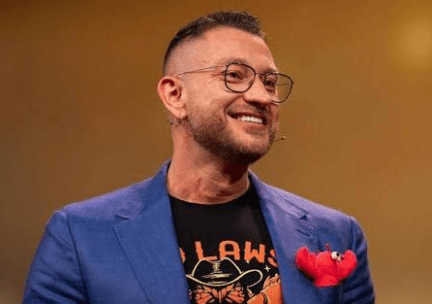
OpenClaw was created by Austrian software developer and entrepreneur Peter Steinberger. What began as a personal project quickly developed into one of the world’s most prominent open-source personal AI initiatives.
Steinberger is also known for founding PSPDFKit, a document technology company that became a major global software business. His work on OpenClaw helped popularise the idea that AI should not only provide information but should also be capable of operating tools and completing useful tasks under the direction of its user.
The project’s rapid growth demonstrated the scale of global interest in AI assistants that are open, customisable and controlled more directly by the people using them. OpenClaw has
since developed into a broad international ecosystem of developers, entrepreneurs, researchers and users experimenting with the future of personal AI.
More Than 400 People Attend ClawCon Nairobi
The strength of this movement was visible in Nairobi, where more than 400 people attended ClawCon Nairobi at Strathmore University.
Hosted by First Circle Capital Partner Agnes Aistleitner, the community-led event brought together developers, founders, students, researchers, creators, operators and people exploring artificial intelligence for the first time. Participants attended demonstrations, exchanged ideas and examined how personal AI agents could be applied to everyday work, business processes and new technology products.
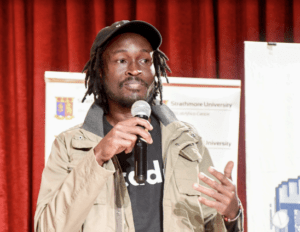
ClawCon emerged from the OpenClaw community as a platform for practical conversations about personal AI, digital sovereignty, automated workflows and the tools allowing individuals to build their own intelligent systems. The Nairobi gathering formed part of a growing international network of community events centred on these themes. One of the presenters, developer Frank Odongkara says: “Openclaw is an exciting technology leap for African entrepreneurs, professionals, and students. It’s now possible to have an intelligent, personal assistant in your WhatsApp DM that is just yours alone. And it costs next to nothing.”
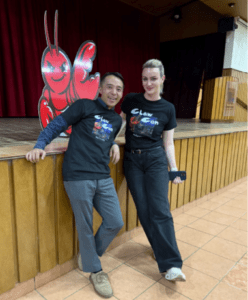
The turnout at Strathmore University showed that interest in personal AI is not limited to traditional global technology centres. Nairobi’s technology community is actively exploring how AI agents can be built, deployed and adapted to solve local and global problems.
It also reflected a wider change in the AI conversation. People are no longer asking only what artificial intelligence can generate. Increasingly, they are asking what it can operate, what it can automate and how it can become a useful extension of their own capabilities.
Personal AI as a New Computing Layer
The rise of OpenClaw points towards a future in which personal AI assistants become a new interface between individuals and technology.
Instead of manually moving between dozens of applications, searching through fragmented information and repeating administrative tasks, individuals may increasingly direct a personal AI assistant that can coordinate those systems on their behalf.
This shift remains at an early stage. Important questions around security, permissions, privacy and accountability must continue to be addressed as these systems become more capable. Nevertheless, the rapid growth of OpenClaw and the strong response to ClawCon Nairobi indicate that the personal AI movement is gaining momentum.
The opportunity is not simply to make existing software faster. It is to give more people access to digital systems that can learn their workflows, expand their productive capacity and help turn artificial intelligence into something genuinely useful in everyday life.
For official information, documentation and installation instructions, readers should consult the official OpenClaw website and documentation portal. openclaw.ai
OpenClaw Founder Peter Steinberger © TEDTalks :
About The Author