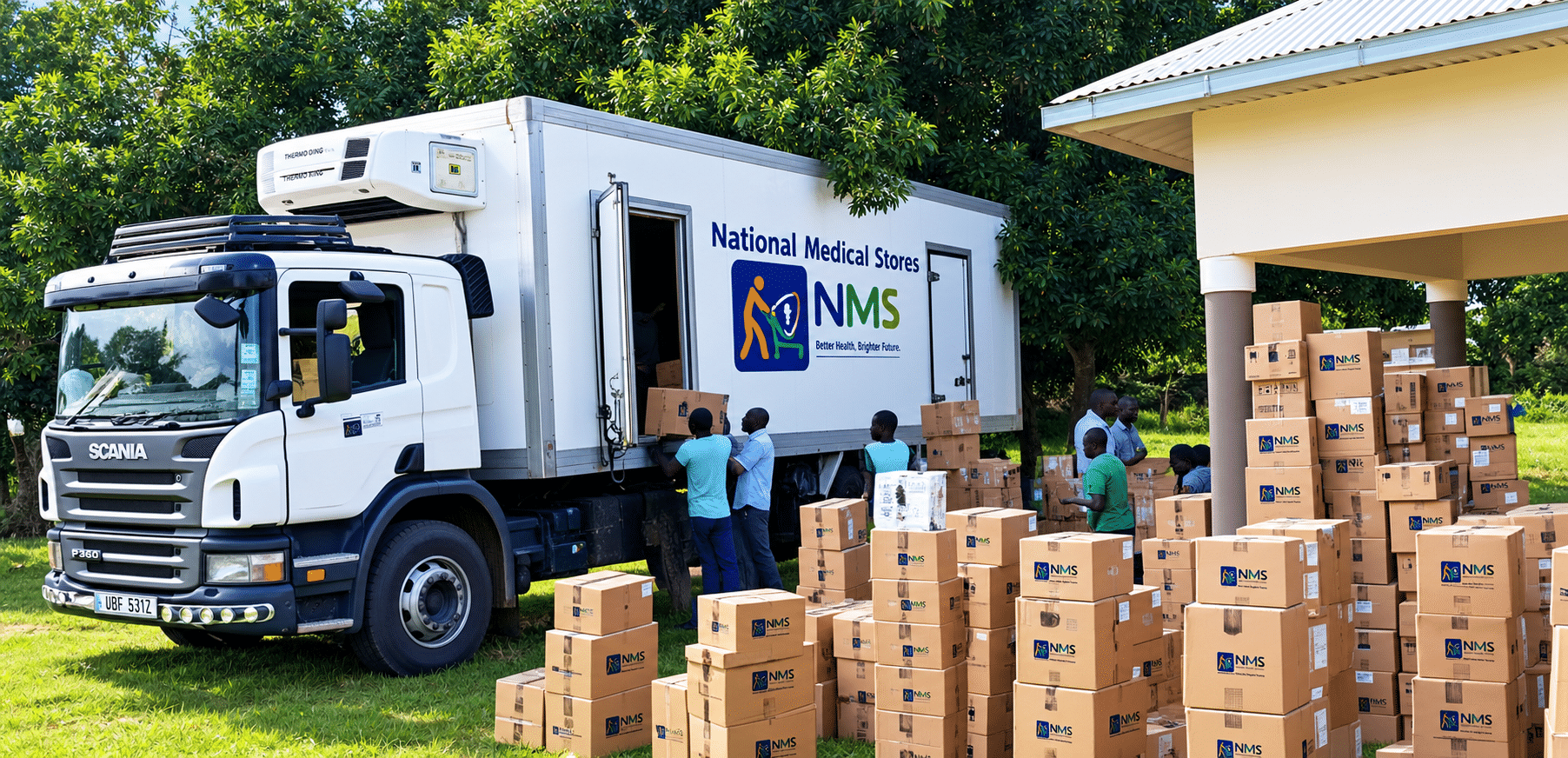
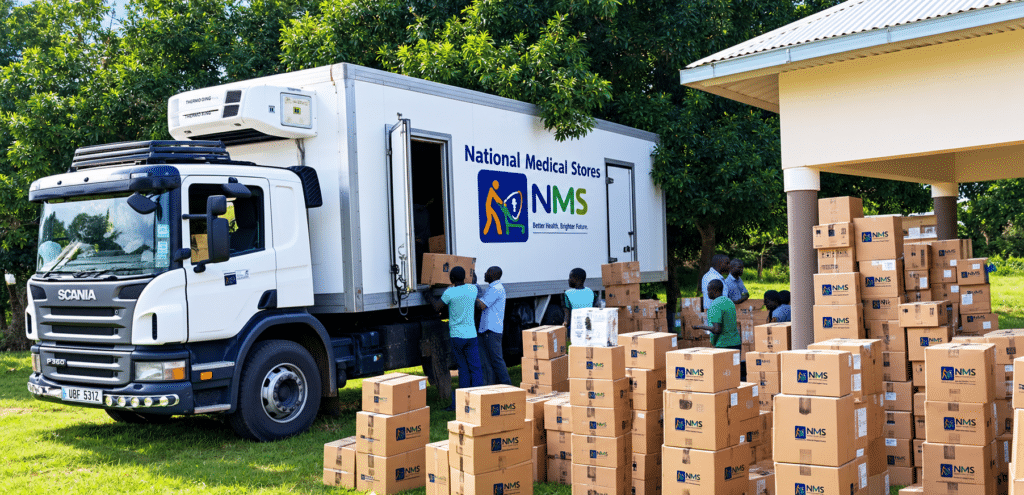
KAMPALA — A new interdisciplinary PhD research project is set to examine how Uganda can build a more resilient healthcare supply chain and improve access to essential medicines and health supplies, with particular attention to the systems connecting the National Medical Stores (NMS) to health facilities and, ultimately, patients.
The project, titled “Building Resilient Healthcare Supply Chains in Uganda: Improving Access to Essential Medicines and Health Supplies,” is being developed at Edinburgh Napier University’s Business School, in collaboration with the Department of Design, Manufacturing and Engineering Management at the University of Strathclyde.
The research is particularly timely for Uganda, where the availability of medicines depends on a complex chain involving procurement, forecasting, warehousing, transportation, health-facility ordering, information systems, financing and last-mile delivery managed by NMS.
The PhD project proposes to map this system and identify the factors that can make it more resilient, integrated and responsive, with special attention to populations that face geographical or socioeconomic barriers to healthcare.
NMS at the heart of the supply chain
At the centre of Uganda’s public-sector medicines supply chain is the National Medical Stores (NMS), the statutory agency established under the National Medical Stores Act of 1993 whose staff will be encouraged to pick interest in this PhD study.
NMS is mandated to procure, store and distribute essential medicines and health supplies to public health facilities across Uganda. Its mandate has expanded to cover all government health facilities, including those operated by the police, army and prisons, while the organisation also handles the distribution of vaccines.

NMS also operates a last-mile delivery system, taking medicines and supplies to health facilities rather than leaving facilities to collect commodities from distant distribution points.
This makes NMS a critical node in any attempt to understand how Uganda’s national health supply chain performs — but the proposed PhD research goes beyond the performance of one institution.
It will examine the wider network connecting government agencies, suppliers, healthcare facilities, health workers, development partners, community-level actors and patients.
Stock-outs remain a supply-chain challenge
The need for such research is underscored by previous assessments of Uganda’s health supply chain.
A national study involving 128 public and private-not-for-profit health facilities across 48 districts found that 84% of the facilities reported experiencing stock-outs of essential medicines and health supplies during the preceding six months.
The study, published in the Journal of Pharmaceutical Policy and Practice, identified several reported causes, including sudden increases in demand, delivery gaps or delays, and discrepancies between orders and deliveries.
The same assessment found gaps in the infrastructure supporting supply-chain management. Only 42% of the facilities surveyed had computer hardware, while 84% reported using some form of Logistics Management Information System; only 6% were using an electronic Logistics Management Information System at the time of the study.
The findings point to a challenge that cannot necessarily be addressed simply by increasing the volume of medicines procured.
Instead, the reliability of the entire chain — from forecasting and procurement to storage, information sharing, ordering, transportation and delivery — matters.
From procurement to the patient
The proposed PhD research will initially seek to develop a comprehensive map of Uganda’s healthcare supply chain.
This will examine how medicines, health products, information and resources move from procurement and national distribution through health facilities and community-level services to patients.
The researcher is expected to engage a broad range of stakeholders, potentially including government ministries and agencies, NMS and other procurement and distribution organisations, pharmaceutical suppliers, public and private health facilities, non-governmental organisations, development partners, healthcare professionals, supply-chain personnel, community health workers and patients.
The research will investigate areas such as procurement and sourcing, demand forecasting, inventory management, stock-outs, supply-chain integration, information sharing, digitalisation, last-mile distribution, affordability, geographical accessibility and stakeholder coordination.
This systems approach is important because a breakdown at one point in the chain can affect the availability of medicines elsewhere.
For example, inaccurate demand information can affect procurement and stock planning; delayed deliveries can leave facilities without commodities; weak information systems can limit visibility of available stock; while geographical and financial barriers can determine whether vulnerable communities can access services even when commodities are available elsewhere.
A resilience question
The project also comes at a time when Uganda’s health sector is increasingly focusing on supply-chain risks and preparedness.
Uganda’s National Health Supply Chain Risk Register identifies risks associated with governance, financing, forecasting, logistics, human resources, information systems and external shocks. It calls for stronger coordination, reliable data, monitoring and proactive risk management across the supply chain.
For the proposed PhD, resilience therefore goes beyond simply ensuring that medicines are available during normal operations.
The research will explore how the system can anticipate, absorb and respond to disruptions while maintaining access to essential commodities.
That could include examining the role of digital systems, better forecasting, improved inventory visibility, stronger coordination among supply-chain actors and more responsive last-mile distribution.
NMS itself says it has been integrating information technology into its operations to improve visibility of orders and deliveries, including systems that allow users to track delivery progress.
Equity moves to the centre
A major feature of the proposed research is its focus on equitable access.
The project recognises that improvements in overall supply-chain efficiency may not automatically translate into equal access for every population.
People living in remote areas, low-income communities and other disadvantaged settings may have fewer alternatives when medicines are unavailable at public health facilities.
The research therefore proposes to investigate whether Uganda’s existing supply-chain structures adequately respond to differences in geography, socioeconomic circumstances and healthcare needs.
This shifts the question from simply asking “Are medicines available?” to also asking “Who can access them, where, when and under what conditions?”
Evidence to inform policy and practice
The researchers propose a mixed-methods and interdisciplinary approach that could combine supply-chain mapping, policy and document analysis, quantitative health-facility or supply-chain data, stakeholder interviews, focus groups and case studies.
The intention is to generate evidence that can be translated into practical interventions within Uganda’s institutional and healthcare context.
Ultimately, the project aims to develop an evidence-based framework and recommendations for a more resilient, integrated, responsive and equitable healthcare supply chain.
For Uganda, the potential significance lies in connecting supply-chain management with the lived reality of patients.
NMS can procure, store and distribute medicines, but ensuring that a medicine ultimately reaches a patient depends on a much larger ecosystem — including accurate forecasting, adequate financing, functional information systems, appropriate inventory management, reliable transportation, health-facility capacity and effective coordination.
The proposed PhD research seeks to study that entire ecosystem.
Its findings, once the research is completed, could potentially provide evidence for strengthening Uganda’s public health supply chain while offering lessons for other low- and middle-income countries facing similar challenges.
The project is currently listed as a PhD research opportunity at Edinburgh Napier University, with Professor EP Plant and Dr S Sarker identified as supervisors. The project is listed as self-funded, with applications indicated through December 31, 2026.
For Uganda’s health system, the central research question is ultimately straightforward but consequential: how can the country make sure that essential medicines do not merely enter the supply chain, but reliably reach the people who need them?
Interested? Follow this link:
About The Author